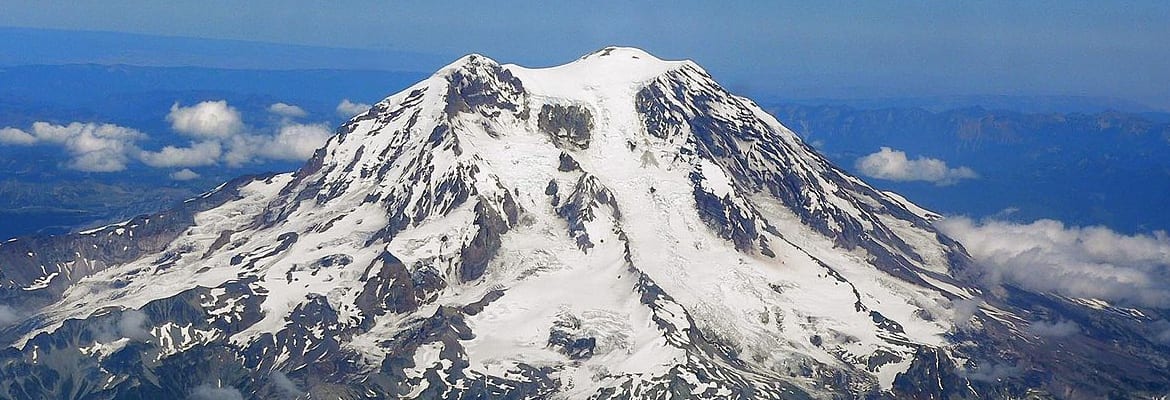
Mount Shuksan Guides: Verified Reviews and Climbing Guide
Mount Shuksan (2,783 m, 9,131 ft) is a glaciated, non-volcanic peak in Washington's North Cascades and one of the most photographed mountains in the United States. Guided climbs usually take two to three days by the Sulphide Glacier, a glacier climb with a steep rock scramble up the summit pyramid, or by the more technical Fisher Chimneys. It is a classic step up after a first glacier climb on Mount Baker. On ExpedReview, as of 23 October 2026, 3 operators have 4 verified client reviews for Shuksan. Ranked first is AAI (American Alpine Institute) (4.8★ from 2 reviews, latest July 2026), followed by Mountain Madness (5.0★ from 1 review, July 2026) and Timberline Mountain Guides (5.0★ from 1 review, January 2019). Below are the ranking and reviews, then a guide to the climb.
Mount Shuksan: key facts | | | |---|---| | Height | 2,783 m (9,131 ft) | | Location | North Cascades National Park, Washington, United States | | Type | Non-volcanic, glaciated peak of metamorphic rock | | Main guided routes | Sulphide Glacier (south); Fisher Chimneys (west) | | Summit | Steep rock pyramid, scrambling and easy climbing | | Typical guided trip | 2–3 days | | Season | Mainly June to September | | Operators reviewed on ExpedReview | 3, with 4 verified reviews (as of 23 Oct 2026) |
Mount Shuksan guides ranked by verified reviews
Rankings use each operator's verified ExpedReview client reviews for Shuksan: the star rating, adjusted so that one or two reviews, or only old ones, count for less than many recent ones. That is why an operator with 4.8★ from two reviews can rank above one with 5.0★ from a single review. Every review is checked by hand before it is published, and operators cannot pay for a better position. Data as of 23 October 2026.
| Rank | Operator | Based in | Rating here | Reviews | Latest review |
|---|---|---|---|---|---|
| 1 | AAI (American Alpine Institute) | United States | 4.8★ | 2 | July 2026 |
| 2 | Mountain Madness | United States | 5.0★ | 1 | July 2026 |
| 3 | Timberline Mountain Guides | United States | 5.0★ | 1 | January 2019 |
No operator lists a current price for Shuksan on ExpedReview, so ask each one directly.
What clients say
The longest review, from July 2026, is about AAI's Alpinism 2 course: three days of multi-pitch rock climbing on the east side of the North Cascades, with ascents of South Early Winter Spire and Liberty Bell, followed by a three-day, student-led ascent of Shuksan. The reviewer praised the two guides as helpful, knowledgeable and friendly, and especially their ability to adapt the objectives to each person's ability, "very challenging but achievable". They warned that the course assumes basic mountaineering skills, such as a Mount Baker course, and suggested practising rope work, crampon technique and crevasse rescue beforehand, since the course focuses on new skills rather than revision. An earlier AAI review, from 2019, is brief but positive.
A Mountain Madness client in July 2026 described a competent guide and smooth logistics, and a guide who "went above and beyond", scouting a good tent site, cooking good food, including soup on the summit, and knowing when to push and when to let the client work things out. A Timberline client in 2019 described a two-day trip by the Sulphide Glacier with "a mix of everything": a walk through old-growth forest, glacier travel, a high camp with an alpine toilet, and rock climbing on the summit pyramid, and called the guides personable and safety-conscious.
The mountain
Shuksan rises east of Mount Baker, near the Mount Baker Ski Area at the end of the Mount Baker Highway. Unlike its volcanic neighbour, it is made of metamorphic rock, and its steep faces, hanging glaciers and icefalls, including the Crystal, Sulphide, Hanging and Upper and Lower Curtis glaciers, give it a much more alpine look. Its reflection in Picture Lake, near Heather Meadows, is one of the best-known views in the American West. The name comes from a Lummi word often translated as "high peak". Most of the mountain lies inside North Cascades National Park, while the approaches cross the Mount Baker–Snoqualmie National Forest.
History
The first recorded ascent was made in 1906 by Asahel Curtis, a well-known Seattle photographer, and W. Montelius Price. The North Face, a long snow and ice route above the Price Glacier, was later included in Steve Roper and Allen Steck's book Fifty Classic Climbs of North America, which helped make Shuksan a goal for climbers across the country.
Routes
Sulphide Glacier
The Sulphide Glacier route, on the south side, is the most popular route and the one most guided trips use. It starts from the Shannon Ridge trailhead above Baker Lake, climbs through forest and up Shannon Ridge to camps at the edge of the glacier, then follows the broad Sulphide Glacier to the base of the summit pyramid. The glacier is relatively gentle but crevassed, so it needs roped travel. The summit pyramid is about 180 m (600 ft) of steep, loose rock, climbed by a central gully or a ridge on its south-east side, usually as a fourth-class scramble with some exposure; guides often belay or short-rope clients here and rappel on the descent. It is usually done in two or three days. In spring, the Sulphide is also a popular ski-mountaineering route.
Fisher Chimneys
The Fisher Chimneys route, from the Lake Ann trail near the Mount Baker Ski Area, is a more technical and varied route. It climbs a series of rock gullies, the Fisher Chimneys, to the Upper Curtis Glacier, then crosses steep snow and ice on sections known as Winnie's Slide and Hell's Highway before joining the Sulphide Glacier and the summit pyramid. It needs a confident climber with experience of steep snow, ice and exposed rock, and usually takes three days. Many climbers consider it one of the best moderate alpine routes in the Cascades.
North Face and other routes
The North Face, the Price Glacier and other routes on the mountain's steep north and east sides are serious ice and mixed climbs, for experienced climbers only. Guides rarely offer them as standard trips.
Difficulty and skills
Shuksan is a significant step up from Mount Baker. The glacier travel is similar, but the summit pyramid adds steep, loose rock and exposure, and the Fisher Chimneys route adds steep snow and ice. Most operators expect clients to have previous glacier experience, including cramponing, ice-axe self-arrest and roped glacier travel, as well as good fitness, since summit days can involve 1,000 m or more of ascent and a long descent. Some offer Shuksan as part of a longer course, as in the AAI review above, while others guide it as a stand-alone climb for experienced clients. Basic rock-climbing experience is very helpful for the summit pyramid.
A typical guided climb
On a typical three-day Sulphide Glacier climb, the group meets in Bellingham or near Baker Lake for a gear check, then drives to the Shannon Ridge trailhead and hikes through forest and up the ridge to a camp near the edge of the glacier. The second day is often spent reviewing skills, such as cramponing, self-arrest, roped travel and crevasse rescue, before moving to a high camp. On summit day, the team leaves before dawn, climbs the glacier while the snow is firm, scrambles up the summit pyramid, and returns to camp, then walks out on the third day. Two-day trips are possible for fit, experienced climbers, as in the Timberline review. A Fisher Chimneys climb usually takes three days, with a camp near Lake Ann or on the ridge above the chimneys.
When to climb
The main season is from about June to September. Early in the season, from about May to early July, there is more snow, which makes the approach and glacier travel smoother and covers loose rock, but avalanche and cornice risk is higher. From late July, the snow melts, crevasses open and the summit pyramid is drier, but rockfall from loose rock becomes a bigger concern. August usually has the most stable weather. The North Cascades get heavy snow and rain, and weather can change quickly, so a flexible plan is essential.
Permits and access
The Shannon Ridge trailhead is reached by forest roads from the Baker Lake Road, which can be rough and are sometimes closed by washouts, while the Lake Ann trailhead is at the end of the Mount Baker Highway near Artist Point, which usually opens only in mid-summer once the snow is cleared. A Northwest Forest Pass or similar recreation pass is needed for parking at Forest Service trailheads. Overnight camping inside North Cascades National Park requires a wilderness permit, and parts of the routes cross into the park. Guided climbs in the park are run under permits by authorised guide services. Rules and reservation systems change, so check the current requirements with the National Park Service and the Forest Service, or ask your guide.
Shuksan or Baker?
Baker and Shuksan are neighbours and often compared. Baker is higher, at 3,286 m (10,781 ft), but technically easier: its standard routes are glacier walks with a steep snow finish and no rock climbing, and guides run three-day courses for complete beginners. Shuksan is lower but more alpine. Its approach is longer and more complex, its glaciers are steeper on the Fisher Chimneys side, and the rock summit pyramid demands scrambling ability and a head for exposure. Most climbers do Baker first, then Shuksan. Both are popular preparation for Mount Rainier and for bigger mountains abroad, and Shuksan's mixed terrain is especially useful for climbers heading to peaks in the Alps or the Andes where rock and snow are combined.
Training
Build fitness for long days carrying a pack with 1,000 to 1,500 m of ascent, ideally with hikes on steep trails carrying 15 to 20 kg. Practise scrambling on rock, either outdoors or at a climbing gym, so that you are comfortable on steep, exposed ground in boots. If it has been a while since you learned glacier skills, as the AAI reviewer suggested, practise crampon technique, self-arrest and rope handling before your trip. Good preparation makes the summit pyramid much safer and more enjoyable, and reduces the time your team spends exposed to rockfall.
Gear
Guided clients typically need mountaineering boots compatible with crampons, crampons, an ice axe, a harness, a helmet, a backpack large enough for two or three nights, a warm sleeping bag, layered clothing, a waterproof shell, gloves, sunglasses and sun protection. Most guides provide ropes, tents, stoves and group gear, and some rent personal technical equipment. Ask your operator for the kit list, and confirm what is included.
Safety
The main hazards on Shuksan are crevasses on the glaciers, rockfall and loose rock on the summit pyramid, avalanche and cornices early in the season, and sudden changes in the weather, including whiteouts on the broad Sulphide Glacier where navigation can be difficult. Accidents have occurred on the summit pyramid, often on the descent, when climbers are tired. Guides reduce the risk by starting early, using ropes and belays on exposed ground, wearing helmets, keeping parties small on the pyramid, and turning back when conditions are poor. Ask your guide how they manage these hazards.
How to choose a guide
Ask which route the operator uses and how much previous experience they require, the guide-to-client ratio, especially on the summit pyramid and the Fisher Chimneys, how they handle rockfall and weather, and whether there is a day of skills training. If you want to learn to lead, ask about courses where clients climb the mountain under supervision, like the student-led AAI ascent in the review above. If you are coming from a Mount Baker climb, Shuksan is a natural next step. Compare guides on our Cascades page, and read the reviews above.
Frequently asked questions
How hard is Mount Shuksan?
Harder than Mount Baker. The Sulphide Glacier route is a moderate glacier climb with a steep, exposed fourth-class rock pyramid at the top, and the Fisher Chimneys route adds steep snow, ice and rock.
How long does it take to climb Shuksan?
Guided climbs usually take two to three days.
Do I need experience to climb Shuksan?
Most guides expect previous glacier experience, such as a Mount Baker climb or a basic mountaineering course, and good fitness.
When is the best time to climb Shuksan?
From about June to September, with August usually the most stable.
Which operator is ranked first for Shuksan on ExpedReview?
As of 23 October 2026, AAI (American Alpine Institute), with 4.8★ from 2 verified reviews, the latest from July 2026.
Related articles
- How to choose a guide
- Best operators
- Cascades Climbing Guides: Verified Reviews for Mount Baker and Mount Shuksan
Climbing in the North Cascades: operators ranked by verified ExpedReview client reviews for Mount Baker and Mount Shuksan, the main peaks and routes, glacier courses, season, permits, skills, cost and how to choose an operator.