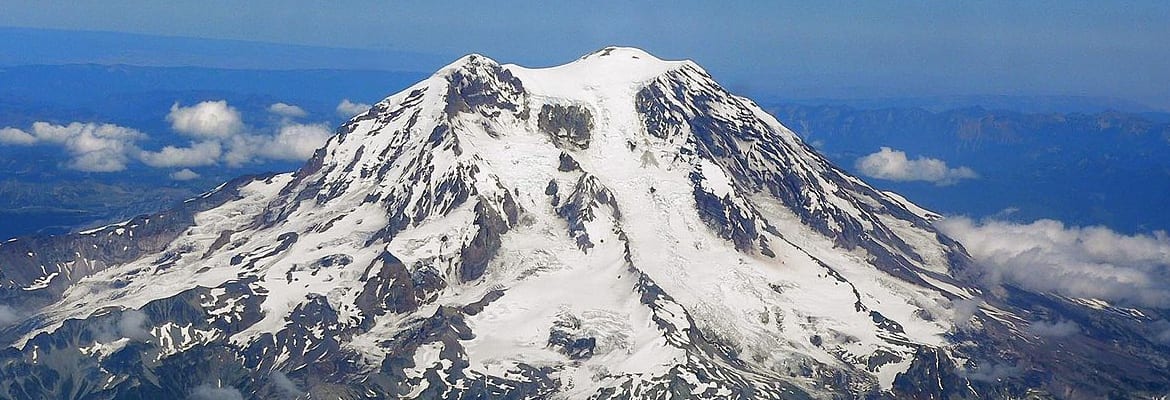
Forbidden Peak Guides and Climbing Guide: West Ridge
Forbidden Peak (2,687 m, 8,815 ft) is a steep granitic peak above Boston Basin in Washington's North Cascades National Park, and its West Ridge is one of the most famous moderate alpine rock climbs in North America, included in the book Fifty Classic Climbs of North America. The standard route climbs a snow couloir to the ridge, then follows an exposed, narrow crest of low fifth-class rock (about 5.6) to the summit, usually in a two- or three-day trip from a camp in Boston Basin. It suits climbers who are comfortable on snow and can follow rock pitches in boots. On ExpedReview, as of 23 October 2026, no operator has a verified client review for Forbidden Peak yet; one Pro guide, AAI (American Alpine Institute), lists trips here. Below is a guide to the climb and how to choose a guide.
Forbidden Peak: key facts | | | |---|---| | Height | 2,687 m (8,815 ft) | | Location | Boston Basin, North Cascades National Park, Washington, United States | | Classic route | West Ridge, about Grade III, 5.6 | | Other routes | East Ridge, North Ridge | | First ascent | 1940, by a party including Fred Beckey and Lloyd Anderson (West Ridge) | | Typical guided trip | 2–3 days | | Season | Mainly July to September | | Operators on ExpedReview | No verified reviews yet; 1 Pro guide lists trips (as of 23 Oct 2026) |
Guides for Forbidden Peak
ExpedReview ranks operators only on verified client reviews, and as of 23 October 2026 no client has reviewed a Forbidden Peak trip. AAI (American Alpine Institute), based in the United States, lists trips here as a Pro guide. A Pro listing means the operator has a profile with trips on the site; it is not a recommendation or a rating, and operators cannot pay for a better position in our rankings. AAI has reviews on other North Cascades peaks, including Mount Shuksan, where a client in July 2026 praised its guides on an advanced course for adapting objectives to each person's ability. Other guide services authorised in North Cascades National Park also run Forbidden Peak climbs. If you climb it with a guide, please leave a review so that others can compare.
The mountain
Forbidden Peak rises at the head of Boston Basin, a high hanging valley above the Cascade River Road, west of Cascade Pass. It is part of a group of steep, glaciated peaks, including Sharkfin Tower, Boston Peak and Mount Torment, that are some of the most rugged in the range. Its three main ridges, west, east and north, rise steeply to a sharp summit, with the Forbidden Glacier on its north side and the Quien Sabe Glacier and Boston Basin snowfields on the south. The rock is generally solid granitic gneiss, unusually good for the North Cascades, which helps explain the West Ridge's popularity.
History
The first ascent, by the West Ridge, was made in 1940 by a party that included Fred Beckey, who went on to become one of the most prolific first-ascensionists in North American history, and Lloyd Anderson, a founder of the outdoor cooperative REI. Beckey and others later climbed other ridges on the peak. The West Ridge's inclusion in Steve Roper and Allen Steck's Fifty Classic Climbs of North America, published in 1979, made it a goal for climbers from across the country, and today it is one of the busiest technical routes in the park in summer.
The West Ridge route
The route starts at the Boston Basin trailhead on the Cascade River Road. The climbers' trail is steep and rough, gaining roughly 900 m to the high camps in the basin, with stream crossings and some brushy sections; most parties take four to six hours. From camp, climbers cross snowfields and a small glacier to the base of the West Ridge couloir, a steep gully of snow, about 40–45°, that leads to a notch on the ridge. Early in the season, the couloir is filled with snow and can be climbed with crampons and an ice axe; later, the snow melts out and a moat opens at the bottom, and parties often climb rock on the side of the couloir instead, which is loose and exposed to rockfall.
From the notch, the route follows the crest of the West Ridge for several hundred metres to the summit. The climbing is mostly fourth class and low fifth class, about 5.6 at its hardest, on solid rock with great exposure on both sides. Parties usually move together, belaying the harder or more exposed sections, with good protection from cams, nuts and slings. The descent is usually by the same route, with a series of rappels and downclimbing on the ridge and in the couloir, and can take as long as the ascent. Most guided parties need 10 to 14 hours or more from camp to summit and back.
Other routes
The East Ridge is a longer rock route, with a direct variation of about 5.8, usually approached from the glaciers on the north and east sides. The North Ridge is a longer, remote route combining glacier, snow and rock. Both are less often guided than the West Ridge.
Difficulty and skills
Forbidden Peak is a technical climb, not a hike or a glacier walk. The West Ridge's grades are modest by rock-climbing standards, but the climbing is in a remote alpine setting, in mountain boots or approach shoes, with a pack, steep snow, exposure, rockfall and a long descent with rappels. Guides usually expect clients to have experience on snow with crampons and an ice axe, some rock-climbing experience, ideally outdoors, of at least 5.6 to 5.8 in rock shoes, and a good head for heights. Strong fitness matters, since the approach is steep and summit days are long. Many climbers do Forbidden after an alpine rock course or after climbs such as Mount Shuksan or Mount Baker. Guides often climb with one or two clients per guide on the ridge.
A typical guided climb
Guided West Ridge trips usually take two or three days. On day one, the group meets in Marblemount or another nearby town for a gear check, drives up the Cascade River Road, and hikes to a camp in Boston Basin, sometimes with skills practice in the afternoon. The summit day starts very early, often before dawn, to climb the couloir while the snow is firm and before the sun loosens rocks. After the summit and the descent back to camp, the group may walk out the same evening on a two-day trip, or stay another night and walk out on day three. Some guide services also offer Forbidden as part of a longer alpine rock course in the North Cascades, combined with peaks near Washington Pass.
When to climb
The main season is from about July to September. In early summer, the couloir is full of snow, which makes it more straightforward with crampons, but cornices and avalanche risk may remain, and the approach may still be snow-covered. From August, the couloir often melts out, with a moat at the bottom and loose rock, so many parties use the rock alternatives. September can have stable weather but shorter days and colder nights. Thunderstorms are a hazard on the exposed ridge in summer. Check recent conditions with your guide or with the park before you go.
Permits and access
Camping in Boston Basin is inside North Cascades National Park and requires a wilderness permit for an overnight stay. Boston Basin is a popular cross-country camping zone with a limited number of permits, and summer weekends fill quickly, so plan ahead. The park also has rules for human waste in the basin, which may require using a toilet where provided or packing waste out. The Cascade River Road can be closed by washouts or snow, and the Boston Basin trailhead has limited parking. Guided climbs in the park are run by guide services authorised by the National Park Service, so if you hire a guide, check that they hold a permit for the park. Rules change from time to time, so check the National Park Service website before you go.
Getting there
The nearest towns are Marblemount, on the North Cascades Highway (State Route 20), and further west, Sedro-Woolley and Burlington. Seattle, the nearest major airport, is about two and a half to three hours' drive away. From Marblemount, the Cascade River Road runs east for about 37 km (23 miles) towards Cascade Pass, and the Boston Basin trailhead is near its end. The Wilderness Information Center in Marblemount is where many climbers pick up permits. There is no public transport to the trailhead, and mobile phone coverage is limited or absent, so make plans before you leave town.
Training
The best preparation is time on alpine rock. Practise multi-pitch climbing outdoors, ideally on routes of 5.6 to 5.8 in mountain boots as well as rock shoes, and get comfortable with rappelling, since the descent involves several rappels. Practise moving on steep snow with crampons and an ice axe, including self-arrest. Build endurance with long hikes carrying a pack of 15 to 20 kg on steep trails, since the Boston Basin approach is steep and the summit day is long. Climbers who arrive fit and comfortable on rock move faster on the ridge, which is safer, because it means less time exposed to rockfall and afternoon storms.
Forbidden Peak and the Fifty Classic Climbs
Many climbers come to Forbidden Peak because it is one of the Fifty Classic Climbs of North America. Other routes from the book in the Cascades include the North Face of Mount Shuksan, Liberty Ridge on Mount Rainier and the North Ridge of Mount Stuart. The West Ridge of Forbidden is one of the more accessible of the fifty, which is why it attracts so many parties in summer. Expect company on fine weekends and allow extra time for other parties in the couloir and on the rappels.
Gear
Guided clients usually need light mountaineering boots that fit crampons and can be used for climbing rock, crampons, an ice axe, a harness, a helmet, a belay device, a few locking carabiners and slings, a small pack for summit day and a larger one for the approach, a sleeping bag, layered clothing, a waterproof shell, gloves and sun protection. Some climbers bring light approach shoes for the rock. Guides usually provide the rope, rack, tents and group gear. Ask your operator for the full kit list.
Safety
The main hazards on Forbidden Peak are rockfall, especially in the couloir later in the season, falls on the exposed ridge, slips on steep snow, the long rappel descent, and the weather. There have been accidents and fatalities on the route over the years, often in the couloir or during the descent. Guides reduce the risk by starting early, using helmets, belaying exposed sections, choosing the safest line in the couloir, and turning back if storms threaten or the party is moving too slowly. Ask your guide how they manage these risks, and what their turnaround times are.
How to choose a guide
Since there are no verified reviews for Forbidden Peak on ExpedReview yet, look at each operator's reviews on nearby North Cascades climbs, such as Shuksan and Baker, and on our Cascades page. Ask about the guide's experience on the route, the guide-to-client ratio on the ridge, what experience they require, whether they hold a National Park Service permit, which approach they use to the ridge late in the season, and how they decide to turn back. Ask about cancellation and weather policies, too.
Frequently asked questions
How hard is the West Ridge of Forbidden Peak?
It is about Grade III, 5.6: moderate rock climbing, but in a remote alpine setting with steep snow, great exposure and a long descent with rappels.
How long does it take to climb Forbidden Peak?
Guided trips usually take two to three days, with a camp in Boston Basin and a summit day of 10 to 14 hours or more.
Do I need a permit to climb Forbidden Peak?
You need a National Park Service wilderness permit to camp in Boston Basin.
When is the best time to climb Forbidden Peak?
From about July to September.
Are there verified reviews for Forbidden Peak on ExpedReview?
Not yet. As of 23 October 2026, AAI (American Alpine Institute) is the one Pro guide listing trips here.
Related articles
- How to choose a guide
- Best operators
- Cascades Climbing Guides: Verified Reviews for Mount Baker and Mount Shuksan
Climbing in the North Cascades: operators ranked by verified ExpedReview client reviews for Mount Baker and Mount Shuksan, the main peaks and routes, glacier courses, season, permits, skills, cost and how to choose an operator.