Upper Mustang Trek Guides: Verified Reviews and Trekking Guide
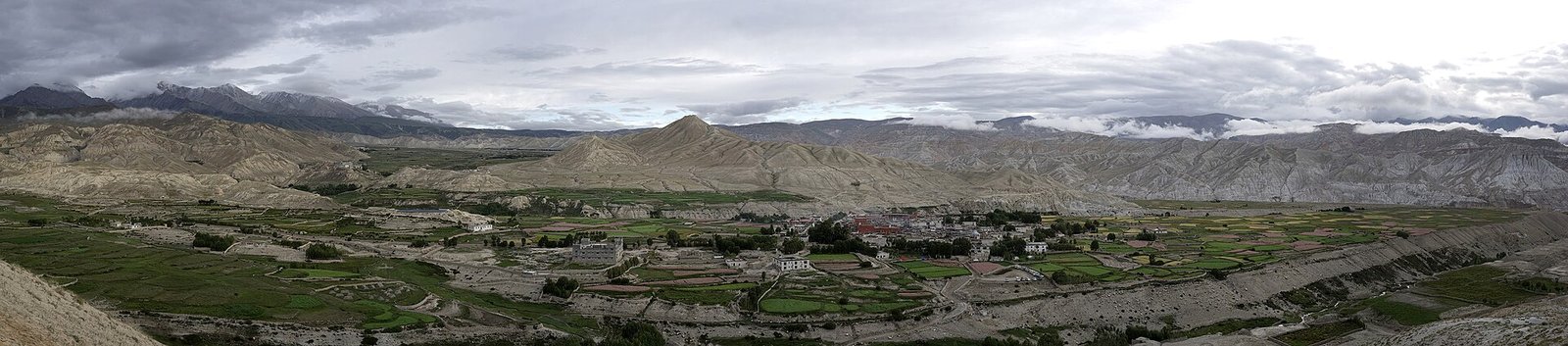
Upper Mustang is a high, arid region north of the Annapurna and Dhaulagiri ranges in Nepal, the former Kingdom of Lo, with a Tibetan Buddhist culture, cave dwellings, monasteries and the walled town of Lo Manthang at about 3,800 m. It was closed to foreigners until 1992 and is still a restricted area: trekkers need a special permit and must travel with a licensed guide through a registered agency, though since March 2026 solo trekkers have been allowed under those conditions. Most treks take 10 to 14 days from Jomsom, and because the region lies in the rain shadow, it can be trekked from spring to autumn, including the monsoon. On ExpedReview, as of 23 October 2026, 1 operator has 2 verified client reviews for Upper Mustang: The Mountain Company (5.0★ from 2 reviews, latest September 2021). Below are the ranking and reviews, then a guide to the trek.
Upper Mustang: key facts | | | |---|---| | Region | Mustang district, north of the Annapurna and Dhaulagiri ranges, Nepal | | Main destination | Lo Manthang, walled capital of the former Kingdom of Lo, about 3,800 m | | Highest points on the trek | Passes of about 4,000–4,300 m | | Opened to foreigners | 1992 | | Permits | Restricted area permit plus Annapurna Conservation Area permit | | Guide rule | Licensed guide and registered agency required; up to 7 trekkers per guide | | Typical trek | 10–14 days from Jomsom | | Season | March to November, including the monsoon | | Operators reviewed on ExpedReview | 1, with 2 verified reviews (as of 23 Oct 2026) |
Upper Mustang guides ranked by verified reviews
Rankings use each operator's verified ExpedReview client reviews for Upper Mustang: the star rating, adjusted so that one or two reviews, or only old ones, count for less than many recent ones. Every review is checked by hand before it is published, and operators cannot pay for a better position. Data as of 23 October 2026.
| Rank | Operator | Based in | Rating here | Reviews | Latest review |
|---|---|---|---|---|---|
| 1 | The Mountain Company | United Kingdom | 5.0★ | 2 | September 2021 |
Bold Himalaya, based in Nepal, also lists trips here but has no reviews for Upper Mustang yet. No operator lists a current price on ExpedReview, so ask each one directly. Both reviews are from 2021 and describe earlier trips, so check recent arrangements, prices and itineraries with operators.
What clients say
Both reviews describe The Mountain Company's Naar to Upper Mustang trek, which starts on the Annapurna Circuit, branches off through the remote Nar valley into the arid landscapes of Mustang, reaches Lo Manthang, and rejoins the Annapurna trail at the end. One reviewer, writing in September 2021 about a trip in autumn 2015, said they had trekked in the Himalaya since 2001 and had been on nine treks with the company since 2008. The other, in June 2021, described the company as running "top end treks", with good group equipment, good treatment and quality of local staff, a willingness to sort out problems, and attention to detail; as an example, the group took a vehicle rather than walking the windswept, busy road to Jomsom at the end. They said the trek "doesn't have the snow capped majesty" of other treks in Nepal but offers "a more cultural and possibly contemplative experience", and warned that it is not easy: it is remote, the days can be long and the wind can be strong. They would not suggest it for a first trek in Nepal, but recommended it for a second or third trip.
The region
Upper Mustang lies north of the deep Kali Gandaki gorge, between the Annapurna and Dhaulagiri ranges and the Tibetan border. It is a high, dry landscape of eroded cliffs, red, ochre and grey rock, wind-sculpted canyons and green oases around villages, more like the Tibetan Plateau than the rest of Nepal. The Kingdom of Lo was founded in the 14th century, and Lo Manthang, its walled capital, contains monasteries with famous wall paintings, including Thubchen and Jampa, restored in recent decades. The kingdom kept its own king, the Raja of Lo, under Nepal until 2008, when Nepal's monarchy and the local titles were abolished. The region is also known for its ancient cave complexes, cut into cliffs and used as homes, shrines and tombs, some of them more than 2,000 years old.
The route
Most treks start in Jomsom, reached by a short flight from Pokhara or by road, and go north up the Kali Gandaki valley to Kagbeni, the gateway to Upper Mustang, where the restricted area begins. From there, the classic route passes through Chele, Syangboche, Ghami and Tsarang, crossing several passes of about 3,800–4,300 m, to Lo Manthang. Most itineraries spend one or two full days around Lo Manthang, visiting its monasteries and the royal palace, and making side trips by foot, horse or jeep to the cave sites and villages nearby, such as Chhoser and Garphu. The return often follows a different route on the east side of the Kali Gandaki, through Dhakmar, with its red cliffs, and Ghar Gompa, one of the oldest monasteries in the region, or via Tetang and Muktinath. A standard trek takes about 10 to 14 days from Jomsom and back, or longer combined with other routes, such as the Nar–Phu valley, as in the reviews above, or the Annapurna Circuit.
Roads and jeeps
A road now runs from Jomsom to Lo Manthang and on to the Tibetan border at Korala, and jeeps and motorbikes use it. Parts of the classic trail follow or cross the road, which some trekkers find disappointing, but good operators use alternative trails on the other side of the valley where possible. The road also allows shorter trips by jeep, which some visitors choose for the Tiji festival or for time reasons. If you want to walk most of the way on trails, ask your operator how much of the itinerary uses the road.
Permits and the guide rule
Upper Mustang is a restricted area, and trekkers need a special permit from Nepal's Department of Immigration, arranged through a registered trekking agency. According to the Nepal Tourism Board, the fee is now US$50 per person per day inside the restricted area, replacing the old minimum of US$500 for 10 days (Nepal Tourism Board). Trekkers also need an Annapurna Conservation Area Project (ACAP) permit. Until March 2026, restricted area permits were issued only to groups of two or more trekkers. In March 2026, the Department of Immigration began issuing permits to solo trekkers, as long as they have a licensed guide and are registered through an agency, with a limit of seven trekkers per guide, and made the agency responsible for emergency rescue and logistics (The Kathmandu Post). Rules and fees change, so check the current requirements with your operator.
When to go
Upper Mustang lies in the rain shadow of the Annapurna and Dhaulagiri ranges, so it receives much less rain than most of Nepal. The trekking season runs from about March to November. Spring, from March to May, and autumn, from September to November, have clear skies and comfortable temperatures, though winds can be strong in the afternoons. The monsoon months, June to August, are also good for trekking in Upper Mustang, when much of Nepal is wet, though flights to Jomsom and roads in the lower Kali Gandaki can be disrupted by weather and landslides. Winter, from December to February, is very cold, and many residents of Lo Manthang move to lower areas.
The Tiji festival
The Tiji festival, held in Lo Manthang each spring, usually in May, is a three-day ritual festival with masked dances by monks, celebrating the victory of the deity Dorje Jono over a demon. Many operators time their treks to coincide with it, and it is one of the most colourful festivals in the Himalaya, attended by people from across the region. Dates follow the Tibetan lunar calendar, so check them each year, and book early, as accommodation in Lo Manthang fills up.
Getting there
Most trekkers fly from Kathmandu to Pokhara, then take the short morning flight from Pokhara to Jomsom, which runs through the Kali Gandaki gorge between Dhaulagiri and the Annapurnas and is one of the most spectacular mountain flights in Nepal. Flights only operate in the morning, because of strong winds later in the day, and are often cancelled in bad weather, so allow at least one spare day at each end. The alternative is the road from Pokhara to Jomsom, about eight to ten hours by jeep or bus, which is rough in places and can be blocked by landslides in the monsoon. Some trekkers drive in and fly out, or the reverse.
A typical itinerary
A typical 12-day trek might look like this: fly from Pokhara to Jomsom and walk to Kagbeni; continue to Chele; cross the first passes to Syangboche; continue to Ghami; walk to Tsarang, with its monastery and old palace; reach Lo Manthang; spend two days exploring Lo Manthang and the caves and villages to the north; return via Dhakmar and Ghar Gompa; continue to Syangboche or Chele; walk down to Kagbeni or Jomsom; and fly back to Pokhara. Shorter and longer versions are possible, and some itineraries add Muktinath, a pilgrimage site sacred to Hindus and Buddhists.
Difficulty
Upper Mustang is a moderate trek. The trails are generally good and not technical, and the altitude, mostly between 2,800 and 4,000 m, is lower than on treks such as Everest Base Camp. But the days can be long, with several passes, dusty trails, strong winds and strong sun, and, as one reviewer said, the region is remote. Trekkers should be fit enough to walk six to eight hours a day for several days in a row, and should acclimatise sensibly, since altitude sickness is still possible at these heights. Accommodation is in simple teahouses and lodges, some of them in traditional houses, or in tents on camping treks.
Culture and responsible travel
Upper Mustang's culture is the main reason to go. Visitors can see monasteries with centuries-old wall paintings, prayer walls and chortens, and traditional villages built of mud brick with stacks of firewood on the roofs. Treat local customs with respect: walk clockwise around chortens and mani walls, ask before photographing people and inside monasteries, dress modestly, and pay entry fees where asked, which support the upkeep of monasteries. The region is changing quickly, with the road, new hotels and migration, and responsible tourism that supports local businesses and avoids waste helps local communities.
Cost
No operator lists a price for Upper Mustang on ExpedReview, so ask each one directly. Treks here usually cost more than treks in open areas, because of the daily permit fee, the requirement for a guide and agency, and transport to and from Jomsom. When comparing prices, check what is included: permits, flights, accommodation, meals, guide and porter costs, jeep transfers and insurance for staff. Ask too whether the price assumes a group of two or more, since a solo trek now possible under the 2026 rule usually costs more per person.
How to choose an operator
Ask about the guide's experience in Upper Mustang, the itinerary and how much of it uses roads, the number of days in Lo Manthang, the standard of accommodation, and how the operator handles flight delays and emergencies. Check that they are a registered agency that can arrange the restricted area permit and provide a licensed guide, and ask about pay and conditions for staff and porters. If you want to see the Tiji festival, ask early. For other treks in the region, see our Annapurna page and our Annapurna Circuit page.
Frequently asked questions
Do I need a guide to trek in Upper Mustang?
Yes. Upper Mustang is a restricted area, so trekkers must have a licensed guide and arrange the trip through a registered agency. Since March 2026, solo trekkers can get a permit under those conditions.
How much does the Upper Mustang permit cost?
According to the Nepal Tourism Board, US$50 per person per day inside the restricted area, plus the ACAP permit.
Can I trek Upper Mustang during the monsoon?
Yes. The region lies in a rain shadow and gets little rain, though travel to and from Jomsom can be disrupted.
How long is the Upper Mustang trek?
About 10 to 14 days from Jomsom and back, depending on the route and side trips.
Which operator is ranked first for Upper Mustang on ExpedReview?
As of 23 October 2026, The Mountain Company is the only ranked operator, with 5.0★ from 2 verified reviews, the latest from September 2021.
Related articles
- How to choose a guide
- Best operators
- Annapurna and Mustang Trekking and Climbing Guides: Verified Reviews
Treks and climbs in Nepal's Annapurna and Mustang region: operators ranked by verified ExpedReview client reviews, plus a guide to the Annapurna Circuit, Annapurna Base Camp, Poon Hill, Mardi Himal, Upper Mustang, Annapurna I and nearby peaks, with permits, guide rules, seasons and how to choose.