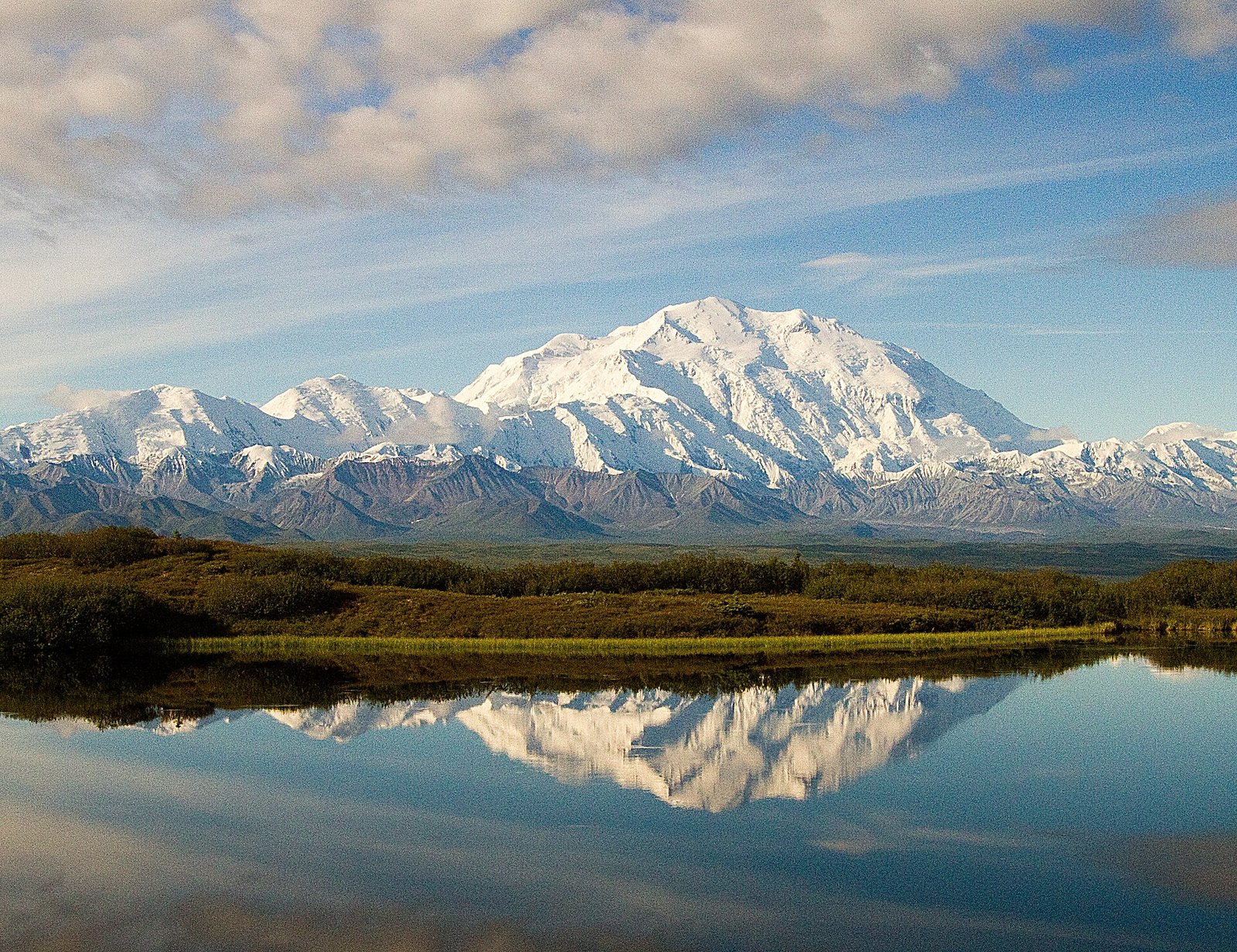
Denali Climbing Guide: West Buttress Route, Camps, Season, Difficulty and Verified Reviews
Denali (6,190 m), in Alaska, is the highest mountain in North America and one of the Seven Summits. Most climbers take the West Buttress route, flying from Talkeetna to the Kahiltna Glacier and spending about three weeks hauling sleds and heavy packs up a series of glacier camps to a high camp at about 5,200 m, then making a long, very cold summit day. There are no porters or fixed high camps; teams carry everything themselves. Denali is not highly technical, but its extreme cold, storms, crevasses and self-sufficiency make it one of the hardest Seven Summits. Only guide services authorised by the US National Park Service can guide on the mountain. On ExpedReview, as of 23 October 2026, 3 operators have 5 verified client reviews for Denali: AAI (American Alpine Institute) (5.0★ from 3, latest November 2020), Climbing The Seven Summits (5.0★ from 1, July 2024, from US$14,995) and Jagged Globe (4.8★ from 1, January 2021). Below are the reviews, the route, season, difficulty, permits and how to choose a guide.
Denali: key facts | | | |---|---| | Elevation | 6,190 m (20,310 ft) | | Location | Alaska Range, Denali National Park and Preserve, Alaska, USA | | First ascent | 7 June 1913: Hudson Stuck, Harry Karstens, Walter Harper and Robert Tatum | | Standard route | West Buttress, from the Kahiltna Glacier | | Gateway | Talkeetna, with a ski-plane flight to base camp | | Typical length | About 17–21 days on the mountain | | Season | May to early July | | Operators reviewed on ExpedReview | 3, with 5 verified reviews (as of 23 Oct 2026) |
Denali operators with verified reviews
ExpedReview ranks operators by their verified client reviews for each place: the star rating, adjusted so one or two reviews, or only old ones, count for less than many recent ones. Every review is checked by hand before it is published, and operators cannot pay to appear or rank higher. Prices are set by the operators themselves. Data as of 23 October 2026.
| Rank | Operator | Based in | Rating here | Reviews | Latest review | Guide-listed price |
|---|---|---|---|---|---|---|
| 1 | AAI (American Alpine Institute) | United States | 5.0★ | 3 | November 2020 | No recent price listed |
| 2 | Climbing The Seven Summits | United States | 5.0★ | 1 | July 2024 | From US$14,995 (updated December 2025) |
| 3 | Jagged Globe | Not listed | 4.8★ | 1 | January 2021 | No recent price listed |
What clients say
AAI (American Alpine Institute). Three reviews praise the guides, logistics and professionalism. One calls it "probably the best expedition I have ever been on", with three very competent guides who got the team to the summit through bad weather and helped other teams on the way down. Another says AAI "exceeded all expectations" and recommends the trip to anyone "interested in experiencing an epic cold weather expedition". A solo climber chose AAI for its friendly pre-trip service and suitable dates, and notes that on Denali "you realistically have to choose between a small number of US accredited companies".
Climbing The Seven Summits. A July 2024 review from a West Buttress team that started on 9 June calls it "the most enjoyable climb I've done so far", thanks to excellent logistics and guiding, and praises guide Dallas Glass for keeping the team "safe, focused and happy".
Jagged Globe. A January 2021 review says the expedition was excellent but that Jagged Globe acted as an intermediary: the trip was run by AAI, "one of the few registered companies allowed to guide on Denali". The reviewer says Jagged Globe handled pre-trip organisation well and AAI was "top notch".
Why climb Denali?
Denali rises about 5,500 m from its base, one of the biggest vertical reliefs of any mountain on land. Its latitude, about 63° north, makes it far colder than Himalayan peaks of similar height, and the thinner atmosphere near the poles makes it feel higher. It is a true expedition, where climbers pull sleds, build snow walls, melt snow for water and wait out storms in tents. Many climbers see it as essential preparation for 8,000 m peaks.
History and name
Denali means "the high one" in the Koyukon Athabaskan language. A prospector named it Mount McKinley in 1896, and the US government formally adopted that name in 1917. Its federal name was changed to Denali in 2015, and in 2025 the federal government restored the name Mount McKinley. The State of Alaska and most climbers still call it Denali, and the national park keeps the name Denali National Park and Preserve. The 1913 first ascent party took the Muldrow Glacier route from the north, and Walter Harper, an Alaska Native, was the first to stand on the summit. Bradford Washburn pioneered the West Buttress route in 1951.
The West Buttress route
Kahiltna base camp
Teams fly by ski plane from Talkeetna to the Kahiltna base camp at about 2,200 m (7,200 ft). Flights depend on the weather, and waits of days are common.
Lower glacier
From base camp, teams travel roped together on skis or snowshoes, pulling sleds up the Kahiltna Glacier to camps at about 2,400 m (7,800 ft) and 3,350 m (11,000 ft). Teams often travel at night when the snow is firmer and crevasse bridges stronger.
Motorcycle Hill and Windy Corner
Above 11,000 ft, teams leave the sleds and climb Motorcycle Hill and Squirrel Hill, then pass Windy Corner, an exposed traverse with crevasse and rockfall hazards, to the camp at about 4,330 m (14,200 ft) in the Genet Basin. The National Park Service runs a ranger camp and medical tent here in season.
The headwall and high camp
Above 14,200 ft, fixed lines climb the steep headwall to the crest of the West Buttress. The ridge leads to high camp at about 5,240 m (17,200 ft), one of the most exposed camps in the Seven Summits.
Summit day
From high camp, the route traverses the Autobahn to Denali Pass (about 5,550 m), a section where many falls have happened, then climbs to the Football Field and Pig Hill, and the summit ridge. Summit day usually takes 10 to 14 hours.
Load carries and the "climb high, sleep low" strategy
Teams usually carry loads up to the next camp, cache them and return to sleep lower, then move camp the next day. This helps acclimatisation, but it means climbing much of the route twice.
Season
The climbing season is from May to early July. May is colder, with more stable snow bridges. June has the most climbers and is usually the warmest. By July, crevasse bridges on the lower glacier weaken.
Permits and rules
All climbers must register with the National Park Service at least 60 days in advance, pay a mountaineering special use fee and the park entrance fee, and attend a briefing in Talkeetna. Climbers must carry out human waste and rubbish. Ask your guide service about the current fees.
Difficulty
Denali is graded Alaska Grade 2, but its difficulty lies in cold, weight and weather. Expect temperatures of −30 °C or lower high on the mountain, storms with winds above 100 km/h, heavy loads and long periods in tents. You need crevasse rescue skills, crampon and ice axe experience, fixed line skills and the ability to carry and pull 30 to 40 kg.
Choosing a guide service
- Choose an NPS-authorised guide service. Only a small number can guide on Denali.
- Check the guide ratio, usually one guide to three or four clients.
- Ask about the itinerary, spare days and weather plans.
- Ask what is included, such as glacier flights, group gear, food, permits and fees.
- Read recent reviews.
See our Alaska guide.
Life on the glacier
Life on Denali is very different from a Himalayan expedition. There are no porters, cooks or base camp staff on the mountain, so everyone shares the work of breaking trail, building camps, digging snow walls against the wind, cooking and melting snow for water. Guided teams cook as a group, but clients still carry heavy loads and help with camp chores. Most teams use skis or snowshoes on the lower glacier, and sleds carry food, fuel and gear for three weeks. Long summer days mean it never gets completely dark in June, which helps with night travel but can make sleep difficult. Storms can pin teams in their tents for days, so patience and a good tent-mate matter.
Dangers on Denali
- Cold injury. Frostbite is one of the most common reasons climbers need rescue. Temperatures can fall far below −30 °C at high camp, and wind chill makes it worse.
- Crevasses, especially on the lower Kahiltna Glacier later in the season. Teams travel roped and practise crevasse rescue.
- Falls, particularly on the Autobahn between high camp and Denali Pass and on the ridge above 14,200 ft.
- Altitude illness. The low barometric pressure at Denali's latitude makes it feel higher than its height.
- Storms, which can last for days and bring extreme winds and heavy snow.
The National Park Service runs rescue operations with a high-altitude helicopter in season, but rescues depend on the weather, so teams must be self-reliant.
Training and experience
Guide services usually ask for previous experience on glaciated peaks, such as Rainier, Aconcagua or an Ecuadorian volcano, along with a mountaineering course covering crevasse rescue and fixed line travel. Train for months, with long days carrying a heavy pack, hill and stair work, and practice dragging a tyre to simulate a sled. Strength training for the legs, back and core is essential.
Gear
Denali needs some of the warmest gear of any of the Seven Summits:
- High-altitude double or triple boots
- A down suit, or very warm down jacket and trousers
- Expedition mitts and several pairs of gloves
- A sleeping bag rated to at least −40 °C
- Crampons, an ice axe, a harness, an ascender and carabiners
- Skis or snowshoes, a sled and harness
- Goggles, glacier glasses and high-factor sun cream
Your guide service will provide group gear such as tents, stoves and ropes.
Cost
On ExpedReview, Climbing The Seven Summits lists Denali from US$14,995. Prices typically include guiding, group gear, food on the mountain and glacier flights, while park fees, hotels in Anchorage or Talkeetna and personal gear may be extra. Ask for a full list.
Denali and the Seven Summits
Denali is often the last major step before Everest. Many climbers do Aconcagua first, then Denali, because its self-sufficient style tests skills that matter on 8,000 m peaks. See our Aconcagua guide.
Talkeetna and getting there
Most climbers fly into Anchorage and travel by road or shuttle for about two and a half hours to Talkeetna, a small town with the National Park Service's Walter Harper Talkeetna Ranger Station, where climbers check in and attend their briefing. Glacier air services in Talkeetna fly teams onto the Kahiltna Glacier, a spectacular flight of about 30 to 45 minutes through the Alaska Range. Bad weather can delay flights in and out, so plan extra days at both ends of the trip.
Who Denali suits
Denali suits climbers with several glaciated peaks behind them who are ready for a long, self-sufficient expedition and can cope mentally with cold, storms and confinement. It is not a good mountain for a first expedition. If you have not yet done a multi-week climb, consider Aconcagua or a Himalayan 6,000 m peak first, and take a crevasse rescue and expedition skills course before you go.
Frequently asked questions
How hard is Denali?
It is one of the hardest Seven Summits, because of extreme cold, heavy loads, crevasses and storms, even though the West Buttress is not highly technical.
How long does it take to climb Denali?
About 17 to 21 days on the mountain.
When is the best time to climb Denali?
May to early July.
Do I need a guide for Denali?
No, but climbers without big-mountain experience should go with an authorised guide service.
Which operators have verified reviews for Denali?
As of 23 October 2026, AAI (American Alpine Institute) (5.0★ from 3), Climbing The Seven Summits (5.0★ from 1) and Jagged Globe (4.8★ from 1).
How much does it cost to climb Denali?
On ExpedReview, Climbing The Seven Summits lists Denali from US$14,995. Check what is included, such as flights, fees and food.
How cold does it get on Denali?
Temperatures high on the mountain can fall below −30 °C, and wind chill makes it colder.
What is the success rate on Denali?
It varies from year to year with the weather. Ask your guide service for its recent summit rates.
Who first climbed Denali?
Hudson Stuck, Harry Karstens, Walter Harper and Robert Tatum, on 7 June 1913. Walter Harper reached the summit first.
Can operators pay to rank higher on ExpedReview?
No. Operators cannot pay to appear, rank higher or have reviews removed.
Related articles
- How to choose a guide
- Best operators
- Denali, Alaska and Yukon Guides: Verified Reviews for Denali and Mount Logan
Climbing in Alaska and the Yukon: operators ranked by verified ExpedReview client reviews for Denali's West Buttress and Mount Logan, how Denali guiding concessions work, registration, season, skills, cost and how to choose an operator.
- Denali Gear List: The Complete Packing List for the West Buttress (2027)
The complete Denali gear list and packing list for the West Buttress: boots, sleeping bags rated to -40, layering, sled and hauling gear, technical kit, camp and cooking equipment, plus permits, fees and how to pack.