Mick Conefrey on Everest 1922: The Forgotten First Attempt to Climb Everest
By Blake Penson · March 10, 2022
Category: climber-profiles
6 min read
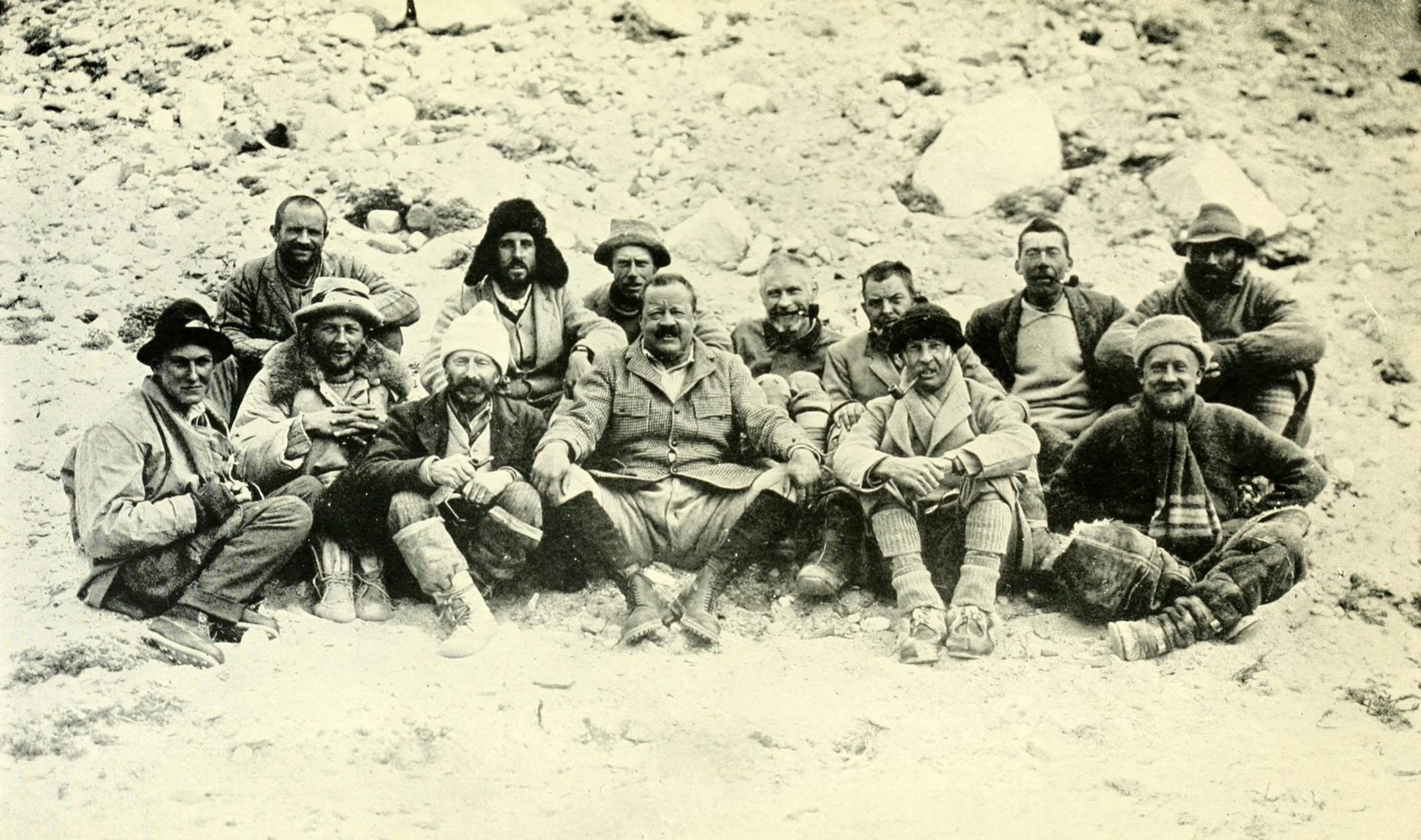
The first attempt to climb Everest was the British expedition of 1922, which approached from Tibet and tried the route over the North Col that George Mallory had found during the 1921 reconnaissance. The team made three attempts. The first, without bottled oxygen, reached about 8,225 m; the second, by George Finch and Geoffrey Bruce using oxygen, reached about 8,326 m (27,320 ft), a world altitude record; and the third ended when an avalanche below the North Col killed seven porters. In his book Everest 1922, published in spring 2022 for the centenary, author and documentary maker Mick Conefrey tells this neglected story. He told ExpedReview that the expedition has been overshadowed by Mallory and Irvine's disappearance in 1924, but that many of its debates, from bottled oxygen to pushing on against medical advice, are still alive on Everest today. Below is our interview and the background to the 1922 expedition.
| Expedition | British Mount Everest Expedition, organised by the Mount Everest Committee (Royal Geographical Society and Alpine Club) |
| Leader | General Charles Bruce |
| Approach | Through Tibet; Nepal was closed to foreigners |
| Route | East Rongbuk Glacier, North Col, North Ridge |
| 1st attempt | Without oxygen; Mallory, Norton, Somervell and Morshead reached about 8,225 m |
| 2nd attempt | With oxygen; George Finch and Geoffrey Bruce reached about 8,326 m, a world altitude record |
| 3rd attempt | Ended by an avalanche below the North Col that killed seven porters |
| Book | Everest 1922 by Mick Conefrey, published April 2022 |
| Author's earlier book | Everest 1953, on the first ascent |
Why Conefrey wrote Everest 1922
A decade after publishing Everest 1953, about the first ascent of the mountain, award-winning author and documentary maker Mick Conefrey went back to the beginning to tell the story of the first attempt.
"People are very focused on [George] Mallory and [Andrew] Irvine and what happened in 1924," Conefrey told ExpedReview. "But the first-ever expedition in 1922 has been neglected because the only question that anybody's interested in is whether Mallory and Irvine got to the top."
"I thought, well, actually what about the first expedition, and I tried to compare it to how things have changed 100 years on," he added. "In lots of ways, it's kind of a forgotten expedition."
Using a wide range of primary sources, including memos from the Royal Geographical Society and the Mount Everest Committee, and the diaries and letters of the people involved, Conefrey pieces together the story of the expedition and everything that went on behind the scenes to make it possible.
Getting into Tibet
In the 1920s, Himalayan expeditions were extremely rare. Nepal was closed to Western foreigners, and Tibet, also largely closed, allowed British parties in only after diplomatic negotiations.
"But it wasn't easy to get into Tibet," Conefrey said. "Tibet wasn't part of the British Empire, and there had to be lots of negotiations behind the scenes with the Dalai Lama and the Tibetan government to get them to agree to it."
In 1921, a British reconnaissance expedition explored the approaches to Everest from Tibet. After exploring several possible routes, Mallory identified a line via the East Rongbuk Glacier and the North Col that he thought could work. The following year, the British returned to attempt it.
The approach alone was a major undertaking: weeks of travel from Darjeeling across the Tibetan plateau with hundreds of porters and pack animals. Today, climbers can drive to the north side Base Camp. See our guide to Everest from Tibet.
The 1921 reconnaissance
The 1921 expedition was not meant to climb Everest but to find a way up it. Its members mapped the northern approaches, explored the Rongbuk and Kharta valleys and, after months of searching, Mallory and Guy Bullock found that the East Rongbuk Glacier led to the North Col. The expedition was also marked by tragedy before it reached the mountain: the Scottish chemist and Himalayan explorer Alexander Kellas, a pioneer of altitude physiology, died on the approach march. His research into oxygen and altitude would feed into the debates of 1922.
Equipment and clothing in 1922
The 1922 team climbed in clothing that would seem astonishing today: layers of wool, silk and tweed, gabardine windproofs, leather boots with nails, and puttees wrapped around the legs. Finch, unusually, designed his own down-filled jacket from balloon fabric, an early forerunner of the modern down suit, and was mocked for it until it proved warmer than anything else on the expedition. The oxygen sets were heavy, experimental and often leaked, and the team had to learn to use and repair them on the mountain. Ice axes were long and wooden-shafted, and steps were often cut by hand in snow and ice. There were no weather forecasts, no fixed ropes as we know them today and no radios to link the high camps with Base Camp, so decisions high on the mountain were made by small groups of exhausted men with very little information. Given this kit, reaching more than 8,300 m was an extraordinary achievement.
The three attempts
The 1922 expedition made three attempts on the mountain.
The first attempt, without oxygen. Mallory, Edward Norton, Howard Somervell and Henry Morshead set out from the North Col and reached about 8,225 m on the North Ridge before turning back, a height no one had climbed to before.
The second attempt, with oxygen. George Finch and Geoffrey Bruce, using the expedition's experimental open-circuit oxygen sets, climbed to about 8,326 m (27,320 ft). It was a new world altitude record, and showed that bottled oxygen could help climbers go higher.
The third attempt. After the first two attempts, Mallory led a third, with Somervell, Colin Crawford and a team of porters. Below the North Col, an avalanche swept the party, and seven porters were killed.
"It was the biggest disaster in Himalayan history until the late 1930s, but it's been forgotten," Conefrey said. "Until 1996, I don't think there'd been anything as serious as that on Everest."
Two years later, in 1924, Mallory returned and attempted the summit via the Northeast Ridge, the route still used today from Tibet. He and Andrew Irvine disappeared high on the mountain; whether they reached the top is still debated. Mallory's body was found in 1999.
A character-driven story
While the avalanche gives the story a tragic climax, Everest 1922 is above all about the people.
The book is "about what happens when you put people under pressure, and mountains are a very pressurised environment, which brings out the best or the worst in people," Conefrey said.
As with any story where the reader knows the ending, the challenge is to take them along the journey: how Mallory and the others were chosen, and how they got as far as they did.
"That sense of it being a national drama, not just a personal drama, makes it more interesting," he said. "There's the big politics in terms of the British trying to negotiate with the Tibetans. And then there's the small politics, which is what goes on within the Royal Geographical Society."
"What's interesting about this particular story, this particular era, is there's a lot of stuff going on behind the scenes, as well as on the actual mountain, which doesn't happen as much with a modern story," he added.
The oxygen debate: then and now
Some of the strongest echoes between 1922 and today concern bottled oxygen, and whether using it was against the spirit of mountaineering.
"George Finch, the scientist, became the apologist for oxygen on the team, even though he didn't really want to be that, and it wasn't particularly his idea," Conefrey said. "And the kind of arguments, which are still current arguments regarding is it right to use oxygen? Is it cheating?"
Finch, an Australian-born chemist and one of the best climbers of his generation, tested the sets and argued that oxygen was a legitimate tool. Others saw it as unsporting. A century later, the debate continues: most Everest climbers use supplemental oxygen, while ascents without it, first achieved by Reinhold Messner and Peter Habeler in 1978, are seen as a purer style. Modern debates also cover higher flow rates, oxygen use from lower camps and, recently, pre-acclimatisation methods such as hypoxic tents and xenon gas. See our interview with Lukas Furtenbach on flash climbing and the death zone and acclimatisation.
Alpine style in the 1920s
Conefrey also sees an echo of modern lightweight tactics in 1922.
"What you see in the Himalayas in the 1950s and the 60s was very big expeditions, doing things in a very gradual sort of way," he said. "Then, in the 1970s and 80s, the top climbers changed tactics. Instead of doing these massive expeditions, they did what they call alpine-style climbing."
"In a funny way, that was what they were almost doing in the 1920s as well because they didn't know what to expect, and so they underestimated it," he added. "They always underestimated Everest."
"They did think they could get from the North Col to the top with two camps or maybe three, whereas by the 1950s, people said, no, you have to have five," he continued. "They would camp every 1,000 feet (300 metres), gradually laying siege to the mountain."
Today's commercial expeditions on the north side use three camps above Advanced Base Camp: the North Col, Camp 2 and Camp 3 at about 8,300 m, close to the height reached in 1922.
Mistakes that are still repeated
Some of the 1922 team's mistakes are still made by Himalayan climbers today. Before the third attempt, one of the expedition doctors advised against trying again, but two others disagreed. With mixed medical advice, it was hard for anyone to say no.
"The kind of same forces that compel people now to push boundaries were going on in 1922," Conefrey said. "You want to get to the summit. If somebody says you can have another go, often it's easy for your better judgment to be clouded."
The third attempt was also made soon after heavy snowfall, when avalanche risk on the slopes below the North Col was high. Modern climbers face the same pressure: a last chance before the season ends, a summit that feels within reach, and conflicting advice. Setting firm turnaround times, listening to medical advice and respecting avalanche conditions remain among the most important safety decisions on Everest. See Everest deaths and speed climbing vs safety.
The porters of 1922
The seven men killed in the avalanche were porters from the Darjeeling area, Sherpa and Bhotia men who carried loads for the expedition. Their deaths were the first recorded on Everest. Their role, largely unrecognised at the time, foreshadowed the central part Sherpas have played on Everest ever since, and the risks they still carry, as in the 2014 Icefall avalanche that killed 16 Nepali workers. Recognising their contribution is part of telling the 1922 story fully.
How Everest has changed in 100 years
| 1922 | Today | |
|---|---|---|
| Access | Weeks of travel from Darjeeling across Tibet | Drive to Base Camp (north) or fly to Lukla (south) |
| Equipment | Tweed, wool, leather boots, experimental oxygen | Down suits, insulated boots, modern oxygen systems |
| Knowledge | No one had been above about 7,500 m | Thousands of ascents and detailed route knowledge |
| Forecasting | None | Detailed weather windows |
| Support | Porters from Darjeeling area | Highly skilled Sherpa guides, a growing number IFMGA-certified |
| Highest point | 8,326 m | Summit, 8,849 m |
See our guide to the evolution of mountaineering.
Further reading
If Everest 1922 interests you, these classic accounts tell the rest of the early Everest story:
- Everest 1953 by Mick Conefrey, on the first ascent by Edmund Hillary and Tenzing Norgay.
- The Ghosts of K2 by Mick Conefrey, on the early K2 expeditions.
- The Fight for Everest 1924, the official account of the 1924 expedition.
- Into the Silence by Wade Davis, on Mallory, the First World War and the expeditions of 1921 to 1924.
About Mick Conefrey
Mick Conefrey is a British author and documentary maker who has written several books on mountaineering history, including Everest 1953, about the first ascent, and The Ghosts of K2, about the early attempts on the world's second-highest mountain. His work draws heavily on archives, letters and diaries to recreate the experiences of early mountaineers.
Frequently asked questions
When was the first attempt to climb Everest?
In 1922, by a British expedition from Tibet, after a reconnaissance in 1921.
How high did the 1922 Everest expedition get?
George Finch and Geoffrey Bruce reached about 8,326 m (27,320 ft) using oxygen, a world altitude record.
Who led the 1922 Everest expedition?
General Charles Bruce.
What happened on the third attempt in 1922?
An avalanche below the North Col killed seven porters, ending the expedition.
What is Everest 1922 about?
Mick Conefrey's book tells the story of the first attempt to climb Everest, the politics behind it and the people involved.
Did Mallory climb Everest in 1922?
He led the first attempt, reaching about 8,225 m, and the third. He disappeared in 1924 with Andrew Irvine.
Tags: mick-conefrey, everest-1922, george-mallory, mountaineering-history