Lukas Furtenbach on Flash Climbing: Hypoxic Tents, Flash Expeditions and Xenon on Everest
By Ash R · November 2, 2020
Category: climber-profiles
7 min read
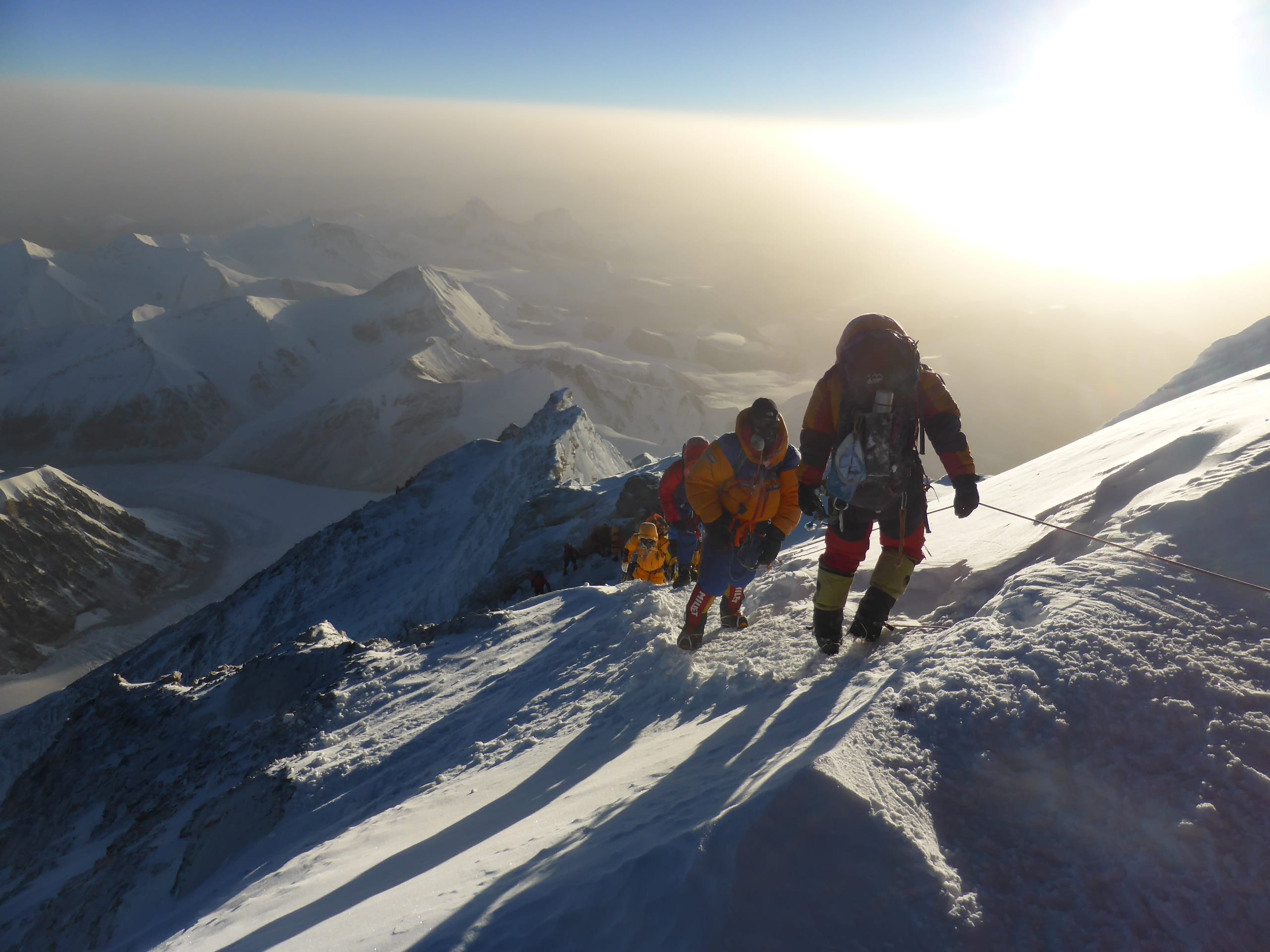
A Flash Expedition, or Flash Climb, is a high-altitude expedition shortened by pre-acclimatising at home in a normobaric hypoxic tent, a tent supplied with low-oxygen air at normal pressure that simulates altitude. Lukas Furtenbach, founder of Austrian operator Furtenbach Adventures, uses the method to cut an Everest expedition from the usual six to eight weeks to about three weeks; in 2018 his clients reached the summit 21 days after leaving home. In this 2020 interview he told ExpedReview that the approach is meant first to make expeditions safer, because clients spend more total time acclimatising (about eight weeks in the tent) and their oxygen is set from measured blood oxygen data. In May 2025, his company went further: four British climbers who had used hypoxic tents and inhaled xenon gas reached Everest's summit about four days and 18 hours after leaving London. Xenon is controversial: the UIAA's medical experts say evidence of benefit is lacking and recommends against its use outside controlled studies. Below is our interview, followed by what has changed since.
| What it is | Pre-acclimatisation at home in a hypoxic tent to shorten an expedition |
| Tent type | Normobaric hypoxia: normal air pressure, reduced oxygen |
| Typical simulated altitude | About 4,500–5,000 m with regular systems; higher with specialist systems |
| Everest flash duration (2018) | 21 days from front door to summit |
| Usual Everest expedition | About six to eight weeks |
| Time in tent before Everest | About eight weeks (vs about four weeks of acclimatisation on the mountain) |
| 2025 xenon climb | Four British climbers, about 4 days 18 hours from leaving London to summit, with supplemental oxygen |
| Medical view of xenon | The UIAA's medical experts recommend against use outside controlled studies |
With working lives busier than ever, climbers are looking for ways to fit more adventure into less time. Flash Expeditions now appear on the programmes of several high-altitude operators. ExpedReview spoke to Lukas Furtenbach to find out what they involve.
What is a Flash Expedition?
"When we use normobaric hypoxic systems (i.e. an acclimatisation tent) to acclimatise at home, with the goal of reducing the duration of an expedition, we call it a Flash Climb or Flash Expedition," Furtenbach said.
"For example, climbing Everest in three weeks, instead of the usual eight weeks. This year we had a climber who climbed K2 without supplemental oxygen in a 21-day round trip from New York."
How does acclimatising in a tent at home work?
"Acclimatisation using hypoxic tents means exposing the body to normobaric hypoxia (normal pressure, low oxygen) and thereby initiating the process of acclimatisation," he explained.
"A filter extracts oxygen from the ambient air and then blows it into a tent. The filter can be regulated, simulating oxygen levels at a particular altitude. In contrast to hypobaric hypoxia (low pressure, low oxygen), the air pressure within the tent remains the same."
Furtenbach argues that air pressure plays at most a minor role in acclimatisation. "Regular systems can simulate altitudes from 4,500 to 5,000 metres (depending on the altitude at which it is situated). With specialist systems and certain procedures, an altitude of up to 8,000 metres can be simulated in your home."
This point is debated in altitude medicine. Research comparing normobaric and hypobaric hypoxia has found some physiological differences between them, so a tent at home may not reproduce real altitude exactly. What is generally accepted is that sleeping in hypoxia can start some acclimatisation before an expedition.
How long do climbers use the tents?
"Depending on your particular goal, you can sleep with one of these tents set up over your bed for a certain number of weeks, gradually increasing the simulated altitude to fit your programme," he said.
"Similar to a real altitude situation, symptoms associated with acclimatisation can occur such as disturbed sleep, headaches or Cheyne-Stokes breathing. Just like at real altitude, these symptoms differ from one person to the next."
"For the best results (i.e. full preparation for very high altitude) we use instruments to measure the oxygen level in the tent, the person's blood oxygen saturation levels and breathing rate at all times."
He draws a distinction between hypoxic tents used for endurance training, as in professional sport, and their use for acclimatisation to shorten or remove the time needed to acclimatise on the mountain.
So do flash climbers spend more time at altitude?
"For an Everest Flash Expedition, the total time of altitude exposure is actually more than on a regular expedition: eight weeks in a hypoxic tent compared to four weeks on the mountain," he said.
"Based on the current thinking in altitude medicine, which claims that the risk of altitude-related physiological complications decreases when longer acclimatisation times are undertaken, then it follows that the level of risk on a Flash Expedition is lower than on a regular expedition."
He also highlights monitoring. "Another important element of our Flash Expeditions is monitoring vital signs like the climber's blood oxygen levels and their heart rate. This now changes the way we can climb high mountains, because decision making on the oxygen flow rate can be objective and based on data, instead of a traditional subjective estimate by a climber or guide."
Why take this approach?
"The number one goal is to make expeditions safer," Furtenbach said. "I was a participant in a study on hypoxic pre-acclimatisation at the University of Innsbruck almost 20 years ago. Since then I have used and experimented with the concept of normobaric hypoxic acclimatisation."
"I went on my first expedition with hypoxic preparation about 15 years ago. We used the hypoxic program on Broad Peak and Cho Oyu about 10 to 15 years ago, and have used it successfully on both sides of Everest since 2016."
"For example, in 2018 we had the shortest successful commercial Everest expedition ever related to our own hypoxic program with a customised piece of hypoxic equipment. From leaving their front door, to reaching the summit, it took our clients 21 days."
He added a warning: "Flash Expeditions require a lot of experience with hypoxic programs, and the right approach on the mountain. Without this experience, there is a high risk that things can go wrong. But if done right, it can definitely make expeditions safer."
What happens at Base Camp?
On a normal Everest expedition, climbers make several rotations up and down the mountain to acclimatise. Asked whether flash clients can go straight up, Furtenbach said: "Yes, our hypoxic training program allows clients to go without oxygen directly to Camp One on Everest at 7,000 metres (interim camp at Advanced Base Camp), and back. This is a safety rotation, and then the next rotation is the summit push." His example refers to the north side, where Camp One sits on the North Col.
Can you do a Flash Expedition without supplemental oxygen?
"Yes. We had Flash climbers going without oxygen on Broad Peak and K2 this year," he said in 2020. "For Broad Peak, it was 14 days from home to the summit, and for K2, 21 days. On Everest we had a Flash climber without oxygen up to 8,300 metres. We eventually told him to use oxygen because he became too slow to keep up with the group (as agreed beforehand). I am very confident that Everest can be done in a 14-day round trip without oxygen."
Are oxygen flow rates different?
"Yes and no. Flow rates are always set individually," he said. "Blood oxygen monitoring (using a pulse oximeter) shows how important it is to give a climber exactly the amount of oxygen that they need. Not a standard flow rate that might work for one person, but is too much or not enough for another. We also use eight-litre regulators to allow climbers to pass crux sections faster (e.g. the Second Step on Everest)."
Does less time on the mountain hurt mountain sense?
We asked whether spending less time on the mountain weakens skills such as reading weather and avalanche conditions or knowing when to turn back.
"We follow the approach that our climbers should already have climbing skills when they go on expedition and not learn them on Everest," he said. "Weather reports are very accurate today, and the avalanche situation has to be evaluated on a daily basis anyway. So no, I can't see any negative impact. Only positive."
Do flash climbers miss out on expedition life?
"No, they also meet other people and they can enjoy the same views. They still spend a lot of time in Base Camp. It is just the endless, boring waiting days and weeks that are cut out."
Why do climbers choose flash expeditions?
"Their job or family situation doesn't allow them to go on a trip for eight or nine weeks. Three to four weeks is somehow doable for most people if it is a once in a lifetime experience."
Since this interview: the 2025 xenon climb
In May 2025, Furtenbach Adventures took four British former soldiers, including UK government minister Alastair Carns, from London to the summit of Everest in about four days and 18 hours, according to Furtenbach, as reported by the BBC. The climbers had slept in hypoxic tents for weeks before the trip and inhaled xenon gas at a clinic in Germany about two weeks before. They flew to Base Camp and started climbing straight away, using supplemental oxygen, with a team of Sherpa guides. It was reported as a record for an Everest ascent without acclimatising in the Himalaya, though not the fastest Everest climb; that record belongs to Lhakpa Gelu Sherpa, who climbed from Base Camp to the summit in 10 hours 56 minutes in 2003 after acclimatising on the mountain.
Xenon is claimed to raise production of erythropoietin (EPO), a hormone that stimulates red blood cell production. The science is disputed. In 2025, the UIAA's medical experts published a position statement saying that the claimed benefits are not supported by current evidence, that xenon inhalation carries risks including respiratory depression, low blood oxygen, high blood pressure and neurological impairment, and that it should not be used in preparation for or during high-altitude expeditions except in controlled studies with qualified medical support. A 2025 review in High Altitude Medicine & Biology reached a similar conclusion, suggesting that hypoxic pre-acclimatisation, supplemental oxygen and good conditions better explain the fast ascents.
Is flash climbing safer?
The case for flash climbing is that clients spend less time exposed to the hazards of the mountain, such as the Khumbu Icefall, and that pre-acclimatisation and data-driven oxygen use can reduce altitude risk. The case against is that a home tent may not fully match real altitude, that clients have less time to adapt and learn the mountain, and that shortened timelines can leave less flexibility for bad weather or illness. Both sides agree that a flash climb depends heavily on the operator's experience, the quality of the hypoxic programme and the client's existing skills. See speed climbing vs safety, acclimatisation and the death zone and how to choose an Everest guide.
Who flash climbing suits
Flash expeditions generally suit experienced climbers who already have high-altitude experience, can commit to weeks of nightly tent sessions at home, and cannot take two months away. Flash programmes add the cost of hypoxic equipment rental and remote monitoring to the expedition itself, so check what a quoted price includes: tent hire, monitoring, oxygen allowance, flow rates, Sherpa support and what happens if the weather window comes late and the short schedule runs out. They suit first-time high-altitude climbers less well, because there is less time on the mountain to build skills and judgement. Compare costs in our Everest cost guide and styles in Everest by expedition style.
Frequently asked questions
What is flash climbing?
Shortening a high-altitude expedition by pre-acclimatising at home in a hypoxic tent.
How long is a flash Everest expedition?
Furtenbach Adventures' clients reached the summit 21 days after leaving home in 2018. In 2025, a xenon-assisted team reached it about four days and 18 hours after leaving London.
Does a hypoxic tent really acclimatise you?
It can start acclimatisation, but normobaric and hypobaric hypoxia are not identical, and how much it replaces time at altitude is debated.
Is xenon safe for climbing Everest?
The UIAA's medical experts recommend against it outside controlled studies, citing risks and a lack of evidence of benefit.
Who is Lukas Furtenbach?
The Austrian founder of Furtenbach Adventures, which runs Everest and other high-altitude expeditions and pioneered commercial flash expeditions.
Can you climb Everest in a week?
The 2025 xenon team did, with weeks of hypoxic tent preparation at home, supplemental oxygen and a strong Sherpa team, but this is not typical.
Tags: lukas-furtenbach, flash-expeditions, hypoxic-tent, everest, k2