Everest South Col vs North Ridge: Nepal or Tibet?
By Blake Penson, Founder of ExpedReview · Everest summiter · Seven Summits climber · 20-year mountaineer · Industry expert
Last reviewed: 20 October 2026 · Editorial picks are ranked only by verified ExpedReview reviews; sponsors cannot buy a position.
The short answer
The South Col (Nepal) is the busier, better-reviewed and more predictable choice; the Northeast Ridge (Tibet) is quieter but depends on Chinese permits that can be withdrawn at short notice. On ExpedReview, the South Col has 55 verified reviews across 9 operators versus 16 across 3 for the North Side. For spring 1980–2002, climbers succeeded about one time in three on the South Col and one in four on the North Col (Huey & Salisbury, AAJ 2003).
| Key figure | What it is |
|---|---|
| 55 | verified South Col reviews (ER) |
| 16 | verified North Side reviews (ER) |
| US$49,375 | median listed South Col price (ER) |
| US$60,000 | median listed North Side price (ER) |
How do the two routes compare?
| Factor | South Col (Nepal) | Northeast Ridge (Tibet) |
|---|---|---|
| Government fee | US$15,000 spring royalty (Nepal DoT) | Set by Chinese authorities; confirm with operator |
| Listed price on ER | Median US$49,375 (20 listings) | Median US$60,000 (8 listings) |
| Historical spring success, 1980–2002 | ~1 in 3 climbers | ~1 in 4 climbers |
| Signature hazard | Khumbu Icefall | Long, cold, exposed summit ridge high on the mountain |
| Access risk | Stable permit system | Permits issued late or cancelled in some years |
Which operators have verified reviews on each side?
South Col
| Operator | Verified reviews | Avg rating /5 | ERTI | Base | Lowest price (ER listing or operator site) |
|---|---|---|---|---|---|
| Furtenbach Adventures | 18 | 4.52 | 4.76 | Austria | US$88,501 |
| Climbing The Seven Summits | 14 | 4.99 | 4.90 | United States | US$54,995 |
| Summitclimb | 6 | 4.67 | 4.62 | United States | US$42,450 |
| Dream Himalaya Adventures | 5 | 4.96 | 4.86 | Nepal | US$41,000 |
| Tim Mosedale | 4 | 3.75 | 4.42 | United Kingdom | US$48,750 |
| Adventure Consultants | 3 | 5.00 | 4.82 | New Zealand | US$83,000 (2027) (Adventure Consultants 2027 Everest price, per operator-page compilation (uncompromised.travel, Sep 2026)) |
| Pioneer Adventure | 2 | 4.70 | 4.26 | Nepal | US$45,000 |
| Elite Exped | 2 | 3.60 | 3.95 | Nepal | US$54,582 |
| 360 Expeditions | 1 | 5.00 | 4.61 | United Kingdom | US$44,995 |
Northeast Ridge
| Operator | Verified reviews | Avg rating /5 | ERTI | Base | Lowest price (ER listing or operator site) |
|---|---|---|---|---|---|
| Furtenbach Adventures | 12 | 4.82 | 4.76 | Austria | US$88,501 |
| Summitclimb | 2 | 4.60 | 4.62 | United States | US$48,850 (2027) (summitclimb.com Everest Tibet page) |
| Kobler & Partner | 2 | 5.00 | 4.30 | Switzerland | US$65,950 |
Which route should a first-time Everest climber choose?
Most first-timers choose Nepal because the infrastructure, rescue options and choice of operators are greater, and because Tibet access can change late. The North Side suits climbers who want fewer people and accept the permit risk. Whichever you choose, the operator's support level matters more than the route.
What else should you plan for?
| Item | Figure or guidance | Source |
|---|---|---|
| Elevation | 8,849 m | Himalayan Database |
| Duration | 52–58 days standard; 21 days on Furtenbach Flash | Operators |
| Summit winds | In 2019 only three days had summit winds under 35 mph (56 km/h) for more than 600 climbers | Alan Arnette, 2026 season summary |
| Acclimatisation | Standard trips rotate to Camp 2 and the Lhotse Face; Furtenbach's Flash replaces most rotations with a home hypoxic tent for up to 8 weeks | Furtenbach Adventures; Arnette 2026 summary |
Frequently asked questions
Is the North Side of Everest easier?
Not clearly. The North Col avoids the Khumbu Icefall but has a longer, colder summit day. Historical spring success (1980–2002) was lower on the North Col than the South Col (Huey & Salisbury).
Is Tibet cheaper for Everest?
Not on current ExpedReview listings: the median credible North Side price is US$60,000 (8 listings) against US$49,375 for the South Col (20 listings). The North Side sample is small.
Which Everest route has more reviews?
The South Col: 55 verified reviews on ExpedReview, against 16 for the North Side (20 October 2026).
Sources
- ExpedReview database (expedreview-prod): approved, verified reviews, operator listings and listed prices, queried 20 Oct 2026 with read-only SELECT queries.
- Nepal Department of Tourism, 'Updated Royalty and Insurance Provisions (effective from 01 September 2025)', tourismdepartment.gov.np/pages/mountaineering-fee.
- Huey & Salisbury, 'Success & death on Mount Everest', American Alpine Journal 2003 (himalayandatabase.com/downloads/Ever-AAJ2003.pdf).
How ExpedReview data works: counts are approved, verified client reviews on ExpedReview as of 20 October 2026. ERTI is ExpedReview's trust index, a summary of review evidence and operator conduct on the platform; it is one input, not a guarantee. Listed prices are each operator's lowest "from" price on ExpedReview and change often. Historical fatality and summit ratios describe past expeditions, not your personal odds.
More background from our earlier guide
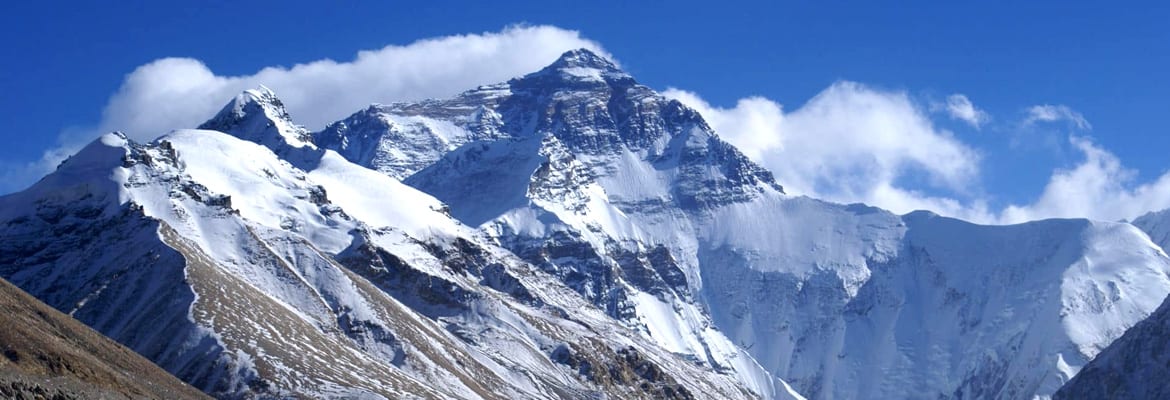
Towering at an awe-inspiring 8,848 meters (29,031 feet) above sea level, Mount Everest stands as an undisputed titan of the Earth’s geography. Its summit, cloaked in perpetual snow and ice, is the highest point on our planet, a crown jewel of the majestic Himalayan range.
For centuries, this colossal peak has captured the human imagination, inspiring dreams of adventure and exploration. Revered as a sacred entity by local cultures, Everest is known as Chomolungma to the Tibetans, meaning "Goddess Mother of the World," and Sagarmatha to the Nepalese, translating to "Goddess of the Sky." Its presence has profoundly shaped the lives of indigenous communities for millennia, influencing their spiritual beliefs, livelihoods, and societal structures. The Sherpa people, renowned for their mountaineering expertise, have forged a unique and enduring bond with the mountain, serving as invaluable guides and porters for countless expeditions.
Beyond its spiritual and cultural significance, Everest has become a global symbol of human ambition and endurance. The allure of conquering its summit has drawn intrepid explorers from around the world, testing the limits of human capability. While the ultimate goal for climbers is to reach the peak, the path they choose to take significantly impacts their experience. This blog delves into the two most popular routes to Everest’s summit: the South Col and the Northeast Ridge.
The South Col Route: A Crowded Path to Glory


The South Col route, situated in Nepal, is undoubtedly the most popular and well-trodden path to Everest’s summit. It was the route taken by the legendary Edmund Hillary and Tenzing Norgay during their historic first ascent in 1953.
Advantages of the South Col Route:
- Established Infrastructure: Due to its popularity, the South Col route boasts a relatively developed infrastructure. This includes well-established base camps at Everest Base Camp (EBC), advanced communication systems, and a network of emergency services. The presence of such facilities can provide climbers with a sense of security and support, crucial for safety and logistical coordination.
- Acclimatization: The approach to the South Col involves trekking through the Khumbu region, which offers gradual acclimatization to high altitude. This extended trek helps climbers to adapt to the thinning air, reducing the risk of altitude sickness.
- Rescue Options: The presence of helicopters and experienced rescue teams in the Khumbu region increases the chances of successful rescue operations in case of emergencies. The South Col’s well-trodden path and proximity to base camp also facilitate quicker evacuations if necessary.
Challenges of the South Col Route:
- Crowds: The overwhelming number of climbers on the South Col has led to significant traffic jams, particularly on summit day. This congestion can increase the risk of accidents, delays, and make the climbing experience less enjoyable.
- Khumbu Icefall: This treacherous section of the route, located between Everest Base Camp and Camp I, is constantly shifting and presents a significant danger to climbers. The icefall is known for its crevasses, seracs, and potential for avalanches, making it a challenging and high-risk area.
- Avalanche Risk: The South Col is susceptible to avalanches, especially during the monsoon season. Climbers must be vigilant about weather conditions and avalanche forecasts to minimize risk.
The Northeast Ridge Route: A Lonelier Path to the Top


Northeast Ridge, located in Tibet, China, is generally less crowded than the South Col. It offers a more remote and challenging experience, making it an appealing option for those seeking solitude and a different perspective on the climb.
Advantages of the Northeast Ridge Route:
- Fewer Climbers: Compared to the South Col, the Northeast Ridge has significantly fewer climbers. This can provide a more peaceful and less congested climbing experience, allowing for a more personal and less stressful ascent.
- Directer Route: The Northeast Ridge route is generally considered a more direct ascent to the summit, with fewer technical challenges than the South Col. The climb is often perceived as having fewer route-finding issues, although it still presents its own set of challenges.
Challenges of the Northeast Ridge Route:
- Remote Location: The Northeast Ridge is located in a more remote region, with limited infrastructure and emergency services compared to the South Col. This isolation can increase the risks associated with climbing, as climbers may face delays in receiving medical attention or rescue.
- Harsh Weather Conditions: The North side of Everest is generally colder and windier than the South. These harsher weather conditions increase the risk of frostbite and other cold-related injuries. Climbers must be prepared for extreme cold and strong winds.
- Permit Restrictions: Obtaining permits to climb Everest from the North side can be more challenging and time-consuming. The bureaucratic process involves navigating regulations set by the Chinese government, which can be more complex compared to Nepal's permit system.
Making the Decision: South Col or Northeast Ridge?


Choosing between the South Col and Northeast Ridge routes depends on a variety of factors, including personal preference, experience level, and physical fitness.
- South Col: This route is generally considered a better option for first-time Everest climbers or those seeking a more supported experience. The established infrastructure, gradual acclimatization, and rescue options make it a popular choice. However, the crowds and the dangers of the Khumbu Icefall should not be underestimated.
- Northeast Ridge: This route is ideal for experienced climbers who crave a more challenging and isolated adventure. The fewer climbers and direct ascent can provide a unique experience, but the harsh conditions and limited resources require careful preparation and planning.
Ultimately, both routes offer the opportunity to summit the world’s highest peak, but they present unique challenges and rewards. Climbers must carefully weigh the pros and cons of each route before making their decision.
Regardless of the chosen path, climbing Everest is an extraordinary feat that requires immense physical and mental strength, as well as meticulous preparation and planning. Each route offers its own set of experiences, making the journey to the top of the world an unforgettable adventure.
Planning your Everest climb? Check out ExpedReview for guides, tips, and reviews on the best expeditions and outdoor activities.