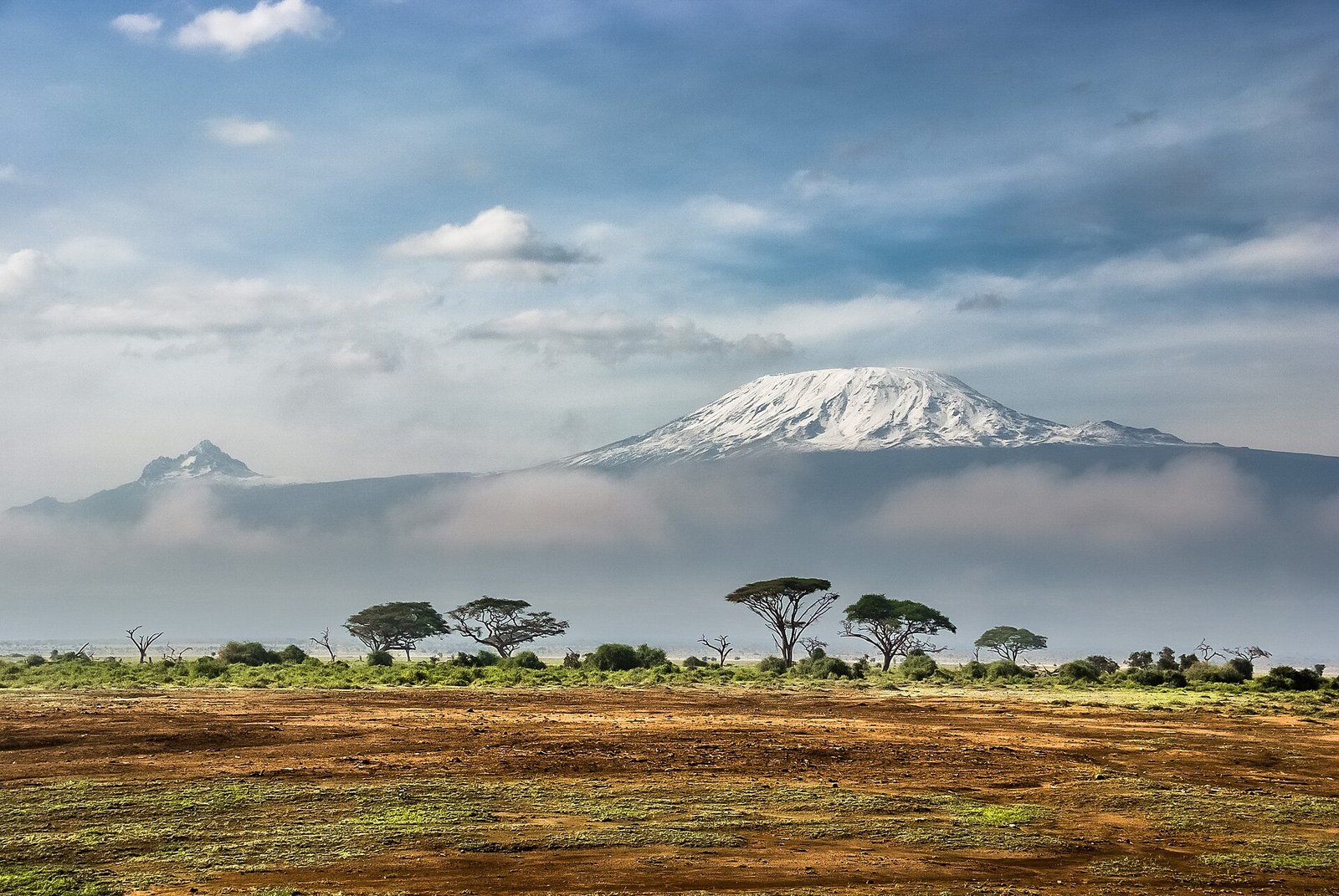
Kilimanjaro Success Rate: What Percentage of Climbers Reach the Summit?
The last widely cited official figures for Kilimanjaro, from Kilimanjaro National Park (KINAPA) in 2006, put the overall summit rate at 45%, rising from 27% on 5-day itineraries to 85% on 8-day ones. No newer official dataset has been published, so the much higher rates operators advertise today are self-reported and calculated in different ways. The factor you can control most is itinerary length: the more days you spend on the mountain, the better your body can acclimatise and the higher your chance of reaching Uhuru Peak, at 5,895 m. ExpedReview does not publish operator success rates because we cannot audit them. On ExpedReview, as of 23 October 2026, 21 operators have 75 verified client reviews for the Kilimanjaro climb.
| Overall summit rate | 45% (KINAPA, 2006) |
| 5-day itineraries | 27% (KINAPA, 2006) |
| 8-day itineraries | 85% (KINAPA, 2006) |
| Newer official data | None published |
| True summit | Uhuru Peak, 5,895 m |
| Crater rim points | Stella Point and Gilman's Point |
| Main cause of failure | Altitude illness and exhaustion |
| ER operators with reviews | 21, with 75 reviews (as of 23 Oct 2026) |
Kilimanjaro operators with verified reviews
ExpedReview ranks operators by their verified client reviews for each place: the star rating, adjusted so one or two reviews, or only old ones, count for less than many recent ones. Every review is checked by hand before it is published, critical reviews stay up, and operators cannot pay to appear or rank higher. Prices are the operators' own guide-listed "from" prices, not quotes. Data as of 23 October 2026: 21 operators with 75 verified reviews for the Kilimanjaro climb. The top 12 are shown; see the Kilimanjaro page for all.
| Rank | Operator | Rating here | Reviews | Latest review | Guide-listed price |
|---|---|---|---|---|---|
| 1 | Altezza Travel | 5.0★ | 14 | October 2026 | From US$2,600 |
| 2 | Bundi Travel | 5.0★ | 9 | September 2026 | From US$2,100 |
| 3 | H.E.C. Kilimanjaro | 5.0★ | 10 | February 2026 | No recent price listed |
| 4 | Peak Planet | 5.0★ | 5 | September 2026 | No recent price listed |
| 5 | Climbing The Seven Summits | 5.0★ | 5 | May 2026 | From US$6,495 |
| 6 | Twiga Hiking Travel | 5.0★ | 3 | August 2026 | From US$1,620 |
| 7 | Nafika Tours | 5.0★ | 3 | June 2026 | From US$1,750 |
| 8 | Kilimanjaro Umoja Tours | 5.0★ | 3 | August 2025 | From US$1,800 |
| 9 | Dodo Group Tanzania Limited | 5.0★ | 4 | November 2022 | No recent price listed |
| 10 | Tranquil Kilimanjaro | 5.0★ | 2 | August 2026 | No recent price listed |
| 11 | G-family Adventures | 5.0★ | 3 | July 2024 | No recent price listed |
| 12 | Great Lake Expedition | 5.0★ | 3 | May 2021 | From US$1,000 |
One operator, Ascend Tanzania, has a 1.6★ rating from 2 reviews (latest April 2026). Read critical reviews in full on its profile.
What clients say
Recent Kilimanjaro reviews are strongly positive. An Altezza Travel client who climbed the seven-day Machame route with her daughter and a friend in October 2026 wrote that "Altezza Travel earned it", and another praised a "huge" gear warehouse for renting kit. A Bundi Travel group of eight (September 2026) described the 8-day Lemosho route, starting with a driver "waiting for us with a placard and a big smile". Several Peak Planet clients (September 2026) praised the guides, the food and the company's "ethical porter treatment". A Tranquil Kilimanjaro couple (August 2026) acclimatised on Mount Meru before the Machame route and called it "the hardest thing we ever did as a couple but worth every penny".
What the official figures say
| Itinerary length | Summit rate |
|---|---|
| 5 days | 27% |
| 6 days | 44% |
| 7 days | 64% |
| 8 days | 85% |
| Overall | 45% |
Source: Kilimanjaro National Park (KINAPA), 2006, as widely republished by operators. No newer official dataset has been found.
These figures are now two decades old, and conditions have changed. More climbers now choose longer routes, such as Lemosho and the Northern Circuit, and many operators carry pulse oximeters and oxygen. But the pattern, that more days means more summits, is consistent with what is known about acclimatisation.
Why operators claim much higher rates
Many operators advertise success rates of 90% or more. These figures are usually calculated on their own clients, often on longer itineraries, and definitions vary. Some count Stella Point or Gilman's Point on the crater rim as a summit, while others count only Uhuru Peak. Some exclude clients who leave early for illness. None are independently audited.
If an operator quotes a success rate, ask:
- Which point counts as a summit? Uhuru Peak, Stella Point or Gilman's Point?
- Over what period, and how many clients?
- On which routes and itinerary lengths?
- Does it include clients who turned back early?
What counts as the summit?
Uhuru Peak, at 5,895 m, is the true summit of Kilimanjaro and the highest point in Africa. Most climbers reach the crater rim first, at Stella Point (on the Machame, Lemosho and Umbwe routes) or Gilman's Point (on the Marangu and Rongai routes), and then walk around the rim to Uhuru. The park issues certificates to climbers who reach the crater rim as well as those who reach Uhuru. If your goal is the true summit, make sure your operator plans for Uhuru Peak.
How many days should you choose?
Choose at least seven days on the mountain, and preferably eight or more. The extra days cost more in park fees and crew wages, but they are the single biggest factor in your chance of reaching the summit. Climbing too fast is the main reason people fail, and it raises the risk of serious altitude illness. See our Kilimanjaro cost guide.
Which routes have the best success?
Longer routes with good acclimatisation profiles have the best success rates. The Lemosho route, usually 7 or 8 days, and the Northern Circuit, usually 8 or 9 days, are among the best for acclimatisation. The Machame route on 7 days also builds in a "climb high, sleep low" profile, with a climb to the Lava Tower before descending to camp. The Marangu route on 5 days and the steep Umbwe route have lower success, because they gain height quickly. See our Kilimanjaro route guide.
Why climbers fail
Most climbers who do not reach the summit turn back because of:
- Altitude illness. Acute mountain sickness causes headaches, nausea and exhaustion. More serious forms, high-altitude pulmonary and cerebral oedema, can be fatal.
- Exhaustion. Summit night is long, cold and steep, often six to eight hours up and several hours down.
- Cold. Temperatures on summit night are well below freezing.
- Illness. Stomach bugs and colds are common.
- Poor preparation. Climbers who are unfit or have not broken in their boots struggle more.
What improves your chance of summiting?
| Factor | Why it helps |
|---|---|
| More days | Slower ascent gives the body time to acclimatise |
| A "climb high, sleep low" profile | Lemosho and Machame build this in |
| Guides who use pulse oximeters and turn people around | Catches altitude illness early |
| Honest fitness preparation | Summit night is long and cold |
| Acclimatising on Mount Meru first | Adds altitude before Kilimanjaro |
Acclimatisation explained
At the summit of Kilimanjaro, each breath contains roughly half the oxygen available at sea level. Your body adapts to thinner air over days and weeks, by breathing faster, increasing your heart rate and, over time, producing more red blood cells. Climbing too fast does not give it time to adapt, which is why short itineraries fail more often. A good itinerary gains height gradually, with acclimatisation days and "climb high, sleep low" walks, where you climb to a higher point during the day and return to sleep lower down.
Everyone acclimatises at a different rate, and fitness does not protect you. Very fit climbers who push too hard can suffer more than slower, steadier climbers. Walk slowly, "pole pole" as Tanzanian guides say, drink plenty of water, eat even when you are not hungry and tell your guide about any symptoms.
Altitude sickness and medication
Acute mountain sickness (AMS) is common on Kilimanjaro, and most climbers feel some symptoms, such as a headache, poor sleep or loss of appetite. Mild AMS usually improves with rest, water and time. More serious forms are emergencies. High-altitude cerebral oedema (HACE) causes confusion, poor coordination and drowsiness, and high-altitude pulmonary oedema (HAPE) causes breathlessness at rest and a wet cough. Anyone with these symptoms must descend immediately.
Some climbers take acetazolamide, often known by the brand name Diamox, to help prevent AMS. Talk to a doctor who knows about altitude medicine before your trip, as it is not suitable for everyone and has side effects.
The role of your guide
A good guide is one of the most important factors in both your safety and your chance of success. Good guides set a slow pace, check your health twice a day, often with a pulse oximeter, and know when to turn a climber around. They also encourage you through summit night. Ask your operator how its guides are trained, how often they check climbers' health and what their policy is for turning back. Several ExpedReview reviewers highlight guides who encouraged them on summit night.
Summit night
Summit night is the hardest part of any Kilimanjaro climb. Most climbers leave their high camp, such as Barafu or Kibo Hut, around midnight and climb for six to eight hours to the crater rim, arriving around sunrise. From Stella Point, it is usually about another hour to Uhuru Peak. The climb is steep and cold, often on loose scree or snow. After reaching the summit, climbers descend to high camp for a rest, then continue down to a lower camp. It is often a 12 to 15 hour day.
Training for Kilimanjaro
Kilimanjaro is a non-technical climb, but it is a long, hard trek at altitude. Train with regular hikes, ideally on hills and with a daypack, building up to back-to-back days of six to eight hours. Add cardio such as running, cycling or stair climbing, and strength work for your legs and core. Break in your boots. Fitness will not prevent altitude sickness, but it will make the days easier and leave more energy for summit night.
Age and Kilimanjaro
People of a wide range of ages climb Kilimanjaro. The park sets a minimum age for climbing to the summit, and older climbers often succeed with longer itineraries and a slow pace. An Altezza Travel reviewer on ExpedReview climbed in October 2026 at age 66 with her daughter and a friend. If you have a health condition, talk to your doctor before booking.
Is Kilimanjaro dangerous?
Kilimanjaro is not technical, but it is a high mountain, and people die on it every year, mostly from altitude illness, falls, cold and existing health conditions. No official annual death count is published. You can reduce your risk by choosing a longer itinerary, a reputable operator, guides who check your health and turn people around, and good insurance.
Choosing an operator for the best chance
Look for an operator that offers longer itineraries, carries oxygen and pulse oximeters, has experienced guides, keeps groups small and treats its crew fairly. Cheap climbs often use short itineraries and fewer guides, which lowers success. Read verified reviews, especially those that describe summit night and how guides handled climbers who were struggling. On ExpedReview, every review is checked by hand before it is published, and critical reviews stay up. The top-rated operators in the table above all have recent reviews describing successful summits, but check each operator's reviews for your chosen route.
Mount Meru as preparation
Mount Meru, at 4,566 m, is Tanzania's second-highest mountain and lies in Arusha National Park, close to Kilimanjaro. Climbing it over three or four days before Kilimanjaro gives your body a head start on acclimatisation. A Tranquil Kilimanjaro reviewer on ExpedReview climbed Meru for four days before a seven-day Machame climb in August 2026. Meru adds cost and time, but it can make Kilimanjaro easier and safer, especially on a shorter itinerary.
What happens if you turn back
If you cannot continue, an assistant guide will take you down to a lower camp, and you will usually meet the rest of the group at the end of the climb. Descending is the best treatment for altitude illness, and most people feel better quickly once they are lower. In an emergency, rescue teams can evacuate climbers by stretcher or, from some points, by helicopter. Make sure your insurance covers evacuation. Turning back is not a failure: it is the right decision when your body tells you it is not safe to continue.
Frequently asked questions
What percentage of people reach the top of Kilimanjaro?
The official 2006 KINAPA figure was 45% overall, and 85% for 8-day itineraries.
Is Uhuru Peak the only summit that counts?
Uhuru Peak is the true summit. Certificates are also issued at Stella Point or Gilman's Point on the crater rim.
Does ExpedReview publish operator success rates?
No. We cannot audit them, so we publish verified client reviews instead.
Which Kilimanjaro route has the highest success rate?
Longer routes with good acclimatisation, such as Lemosho and the Northern Circuit, generally have the highest success rates.
Can a beginner climb Kilimanjaro?
Yes. It is non-technical, but you need good fitness, a long enough itinerary and a reputable operator with experienced guides.
How long is summit night?
Usually six to eight hours up to the crater rim, plus the walk to Uhuru Peak and the descent.
Can operators pay to rank higher on ExpedReview?
No. Operators cannot pay to appear, rank higher or have reviews removed. Rankings come only from verified client reviews, each checked by hand before publication, and critical reviews stay up even when an operator disagrees.
Related articles
- How to choose a guide
- Who Are the Best-Reviewed Kilimanjaro Operators? (US$20–25,)
Kilimanjaro operators ranked only by verified ExpedReview client reviews, with listed prices and the questions to ask before booking.
- Best Time to Climb Kilimanjaro: Month-by-Month Guide to Seasons, Weather and Crowds
Kilimanjaro's dry and wet seasons, when ExpedReview reviewers actually climbed, and how season interacts with route choice.
- How Much Does It Cost to Climb Kilimanjaro? Prices, Park Fees, Tips and What a Fair Quote Includes (US$1,000 to US$6,495)
Listed Kilimanjaro prices on ExpedReview, the fixed park fees under every quote, and why very cheap climbs are a warning sign.
- Kilimanjaro Gear List: The Complete Packing List for Every Route and Season
The complete Kilimanjaro packing list: layering for five climate zones, boots, summit-night clothing, sleeping bag ratings, daypack and duffel, water, electronics, medical kit, what porters carry, weight limits, the plastic-bag ban and what to rent in Moshi or Arusha.