Best Kilimanjaro Operators 2027: Ranked by Verified Climber Reviews
Kilimanjaro operators ranked by verified client reviews
Ranked by verified client reviews for Kilimanjaro on ExpedReview, as of 23 November 2026. Recent reviews count more. Paying ExpedReview never changes the ranking.
| # | Operator | Average rating | Verified reviews | Latest review |
|---|---|---|---|---|
| 1 | Follow Alice | 5.0★ | 14 | November 2026 |
| 2 | Altezza Travel | 5.0★ | 14 | October 2026 |
| 3 | Bundi Travel | 5.0★ | 9 | September 2026 |
| 4 | Peak Planet | 5.0★ | 7 | November 2026 |
| 5 | H.E.C. Kilimanjaro and Safaris Limited | 5.0★ | 10 | February 2026 |
| 6 | Nafika Tours | 5.0★ | 4 | October 2026 |
| 7 | Climbing The Seven Summits | 5.0★ | 5 | May 2026 |
| 8 | Twiga Hiking Travel | 5.0★ | 3 | August 2026 |
| 9 | Kilimanjaro Umoja Tours | 5.0★ | 3 | August 2025 |
| 10 | Dodo Group Tanzania Limited | 5.0★ | 4 | November 2022 |
Short answer: On verified client reviews of Kilimanjaro climbs, Altezza Travel (★ 5.00 from 14 verified reviews), Bundi Travel (★ 5.00 from 9) and Peak Planet (★ 5.00 from 5) are the best-rated Kilimanjaro operators going into the 2027 season. H.E.C. Kilimanjaro and Safaris (★ 4.96 from 10) has the second-largest body of Kilimanjaro reviews on ExpedReview. Every number below is the operator's rating for Kilimanjaro trips only, not its overall score across all mountains, and it was rechecked on 22 October 2026.
ExpedReview lists 145 operators at Kilimanjaro. Most of them have no client reviews for this mountain yet, and they are left out. That leaves a short list. It is short on purpose: it is the only Kilimanjaro ranking we know of that is built on trips real climbers verified, not on an editor's opinion or an advertiser's budget.
Best Kilimanjaro operators 2027: the ranking
| # | Operator | Rating at Kilimanjaro | Reviews here | Latest review | ERTI |
|---|---|---|---|---|---|
| 1 | Altezza Travel | ★ 5.00 | 14 | 17 Oct 2026 | ERTI 4.75 |
| 2 | Bundi Travel | ★ 5.00 | 9 | 25 Sep 2026 | ERTI 4.81 |
| 3 | Peak Planet | ★ 5.00 | 5 | 11 Sep 2026 | ERTI 4.41 |
| 4 | Dodo Group Tanzania | ★ 5.00 | 4 | 15 Nov 2022 | ERTI 4.15 |
| 5 | Kilimanjaro Umoja Tours | ★ 5.00 | 3 | 29 Aug 2025 | ERTI 4.05 |
| 6 | G-family Adventures Safaris | ★ 5.00 | 3 | 29 Jul 2024 | ERTI 4.38 |
| 7 | Great Lake Expedition | ★ 5.00 | 3 | 25 May 2021 | ERTI 3.89 |
| 8 | H.E.C. Kilimanjaro and Safaris | ★ 4.96 | 10 | 12 Feb 2026 | ERTI 4.60 |
| 9 | Climbing The Seven Summits | ★ 4.96 | 5 | 10 May 2026 | ERTI 4.90 |
Early data (1–2 verified reviews here, not ranked):
| Operator | Rating here | Reviews here | Latest review | ERTI |
|---|---|---|---|---|
| Nafika Tours | ★ 5.00 | 2 | 28 Jun 2026 | ERTI 3.99 |
| Kilimanjaro Lifetime Adventures | ★ 5.00 | 2 | 28 Apr 2024 | ERTI 3.79 |
| Twiga Hiking Travel | ★ 5.00 | 1 | 25 Jul 2026 | ERTI 3.74 |
| Tranquil Kilimanjaro | ★ 5.00 | 1 | 22 Dec 2025 | ERTI 3.68 |
| Explore Active | ★ 5.00 | 1 | 5 Apr 2026 | ERTI 3.72 |
| Furtenbach Adventures | ★ 5.00 | 1 | 10 Mar 2026 | ERTI 4.84 |
| Nyamera Treks and Safaris | ★ 5.00 | 1 | 2 May 2025 | ERTI 3.86 |
| Lake Zone Climbers & Safaris | ★ 5.00 | 1 | 29 Jan 2025 | ERTI 3.64 |
| Ian Taylor Trekking | ★ 5.00 | 1 | 6 Jun 2024 | ERTI 4.62 |
| Step to Kilimanjaro | ★ 5.00 | 1 | 9 Oct 2019 | ERTI 3.55 |
| Aardvark Expeditions | ★ 5.00 | 1 | 18 Aug 2026 | ERTI 4.02 |
| Ascend Tanzania | ★ 1.60 | 2 | 8 Apr 2026 | ERTI 2.72 |
Ties on rating are broken by the number of verified reviews, then by the most recent review. Operators with only one or two verified Kilimanjaro reviews appear under "early data". They are not ranked, because two reviews are not enough to tell you much. One early-data operator, Ascend Tanzania, has a low rating (★ 1.60 from 2 reviews). We show it because a ranking that hides bad results is not a ranking.
What the reviews say about the top operators
1. Altezza Travel: the largest set of verified Kilimanjaro reviews
Altezza has 14 verified Kilimanjaro reviews, all five stars, and the most recent one arrived on 17 October 2026. That is the deepest and freshest data on any Kilimanjaro operator on ExpedReview. Altezza is Moshi-based and publishes its prices by route, length and group size on its own site. For the 8-day Lemosho climb (a 10-day trip with two hotel nights), its published price runs from $3,112 per person in a group of 8+ to $5,116 for a solo climber (Altezza price page, checked 22 Oct 2026). A second table on the same page, for the following season, shows $3,230 to $5,120. Altezza appears on the Partner for Responsible Travel list kept by KPAP's parent organisation (see the porter section below). Read the reviews on the Altezza Travel profile.
2. Bundi Travel: nine five-star reviews, recent
Bundi has 9 verified Kilimanjaro reviews, all five stars, with the latest from 25 September 2026. The operator's own prices could not be checked on its website on 22 October 2026, so we do not quote them here. Ask for a written, itemised quote that shows park fees separately. Bundi was not on the Partner for Responsible Travel list we checked on 22 October 2026. That does not mean it treats porters badly. It means you should ask the questions in the porter section yourself. Bundi Travel profile.
3. Peak Planet: small but recent and on the KPAP partner list
Peak Planet has 5 verified Kilimanjaro reviews, all five stars, the latest from 11 September 2026. It is also on the Partner for Responsible Travel list. Peak Planet profile.
4–7. Dodo Group Tanzania, Kilimanjaro Umoja Tours, G-family Adventures, Great Lake Expedition
All four have perfect ratings from 3–4 verified reviews. Check the latest-review dates before you book. Dodo's newest Kilimanjaro review is from November 2022 and Great Lake's from May 2021. A perfect score from several years ago tells you less about this year's guides and kit than a recent one. Umoja's newest verified review is from August 2025 and G-family's from July 2024.
8–9. H.E.C. Kilimanjaro and Climbing The Seven Summits
H.E.C. has 10 verified Kilimanjaro reviews at ★ 4.96, which is a near-perfect average over a larger sample than most of the operators above. If you weigh sample size more heavily than a perfect score, H.E.C. belongs on your shortlist. Climbing The Seven Summits (★ 4.96, 5 reviews) is an international operator. It is on the Partner for Responsible Travel list and is priced well above the local operators. Its Kilimanjaro trips are listed on ExpedReview from $6,495.
Best Kilimanjaro operator by type of climber
- First-time climber who wants the most evidence: Altezza Travel (14 verified reviews) or H.E.C. (10).
- Wants a Tanzanian operator with recent five-star reviews: Altezza, Bundi or Peak Planet. All three have reviews from the last two months.
- Already climbing with an international company on other peaks: Climbing The Seven Summits has verified reviews here and on Everest Base Camp.
- Budget-conscious: see the price section. Get two local quotes on the same route and the same number of days, and compare them line by line.
Local vs international Kilimanjaro operators
Every Kilimanjaro climb uses Tanzanian guides, cooks and porters, because Tanzanian law requires a licensed local guide on the mountain. The difference is who holds the contract. A local operator (Altezza, Bundi, Peak Planet, H.E.C., Umoja and others in the table) employs the crew directly and usually costs less. An international operator adds a western trip leader or its own safety standards and support before and after the trip, and it costs more. Both kinds appear in our reviews with high ratings. The difference that matters more is how the operator treats its crew, its acclimatisation profile, and its emergency plan.
What a Kilimanjaro climb costs in 2027
A fair price has to cover park fees, crew wages, food, equipment and transport. Park fees are a large fixed part. The most recent schedule that Tanzania National Parks (TANAPA) publishes as a document (2023/24) lists Kilimanjaro conservation fees of $70 per adult per day, camping fees of $50 per adult per night and a $20 rescue fee per trip for non-resident climbers (TANAPA tariffs PDF, checked 22 Oct 2026). TANAPA's current tariff page loads its 2026/27 figures in the browser. Confirm them with your operator, and ask whether VAT is included in the fees quoted.
On a 7-day route, conservation and camping fees alone come to around $790 per person ($810 with the rescue fee) before any wages, food or transport. So a quote far below about $1,500 for a 7-day climb leaves little room to pay a full crew properly. Altezza's published 2027 Lemosho prices are given above. For route-by-route trade-offs, see Kilimanjaro Routes Compared.
Porter welfare and KPAP
Kilimanjaro climbs depend on porters. A group of two climbers usually has a crew of ten or more. The Kilimanjaro Porters Assistance Project (KPAP) is a Tanzanian non-profit that monitors porter treatment. Through its parent organisation, the International Mountain Explorers Connection, it runs a Partner for Responsible Travel programme for operators that agree to its porter standards and to monitoring. The standards cover fair wages paid on time, load limits, proper food, shelter and clothing, and fair distribution of tips.
On 22 October 2026 we checked the Partner for Responsible Travel list against our ranking. Altezza Travel, Peak Planet and Climbing The Seven Summits appear on it. The other ranked operators did not appear on that page on that date. The list changes, so check it yourself before you book. Whatever operator you choose, ask:
- What is the porter's daily wage, and is it paid in full at the end of the climb?
- What is the maximum porter load, and is it weighed at the gate?
- Do porters sleep in proper tents and get the same meals as the guides?
- How are tips shared, and can climbers hand them to each crew member directly?
- Will you give me the crew list before the climb?
These are facts about the industry, not part of our ranking. The rating in the table comes only from client reviews.
12 questions to ask any Kilimanjaro operator
- Which route and how many days on the mountain? (Seven days or more improves acclimatisation.)
- Is the price fully itemised, with park fees shown separately?
- Are park fees, the rescue fee and VAT included?
- What is the guide-to-climber ratio on summit night?
- Are guides trained in wilderness first aid, and how often?
- Is bottled oxygen and a pulse oximeter carried, and are checks done twice a day?
- What is the evacuation plan, and who pays for it?
- What is the group size cap, or is the climb private?
- Is a private toilet tent included?
- What happens if I turn around early? Is there a refund for unused days?
- Are you a KPAP Partner for Responsible Travel? (See above.)
- Can you put me in touch with a recent client, or point me to verified reviews? Your ExpedReview profile is one place to check.
Why this list differs from other "best Kilimanjaro operator" lists
Most ranking pages are editorial. A writer picks operators, often with sponsored placements in the mix, and there are no client ratings behind the order. We rank only on verified reviews of Kilimanjaro trips. That is why some well-known international brands are missing: they have no verified Kilimanjaro reviews with us yet. Our earlier 2026 list ranked some operators on their overall trust score even when they had no Kilimanjaro reviews. This 2027 version fixes that. Every operator here has at least one verified review of this mountain.
Kilimanjaro at a glance
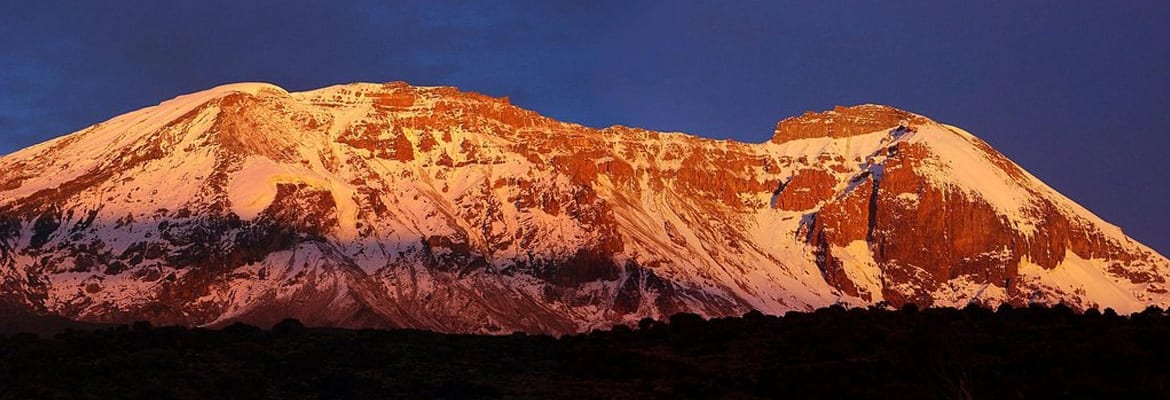
Kilimanjaro is a dormant stratovolcano in northern Tanzania and the highest mountain in Africa. Its highest point, Uhuru Peak on the crater rim of the Kibo cone, is listed by Tanzania National Parks (TANAPA) and UNESCO at 5,895 m (19,341 ft), based on a 1952 survey; later surveys have put it within a few metres of that figure. The mountain has three volcanic cones: Kibo (the summit cone), Mawenzi (5,149 m), and Shira (about 4,005 m). The first recorded ascent was by Hans Meyer and Ludwig Purtscheller on 6 October 1889, and the mountain has been protected as Kilimanjaro National Park since 1973.
What makes Kilimanjaro attractive is also what makes it dangerous. No technical climbing is needed on the standard routes, so the mountain draws tens of thousands of people each year who have never been above 4,000 m. But the summit is high enough for the serious forms of altitude illness, high-altitude pulmonary oedema (HAPE) and high-altitude cerebral oedema (HACE), and most itineraries gain height faster than mountain-medicine guidelines recommend. Choosing an operator is mostly a decision about how well they manage that risk, and only secondarily about tents, food and price.
The climb passes through five broad climate zones. From roughly 800 to 1,800 m you are in cultivated land and lower slopes; 1,800 to 2,800 m is rainforest; 2,800 to 4,000 m is heath and moorland; 4,000 to 5,000 m is alpine desert; and above 5,000 m conditions are arctic, with average summit temperatures around −7 °C before wind chill. You will walk from humid forest to frozen scree in under a week, which is why your gear list has to cover both.
How operators differ on the things that matter
Every licensed operator can get you a permit and a crew. What separates the good ones from the rest is visible only if you ask. These are the areas we suggest you compare across your shortlist, using each operator's own written answers.
Acclimatisation profile. Ask for the daily altitude of every camp, not just the route name. An 8-day Lemosho itinerary from one company can differ from another's by where the extra day is placed. Look for at least one "climb high, sleep low" day (the Lava Tower to Barranco stage does this on Machame and Lemosho) and an acclimatisation or short day before the high camp.
Medical checks. Good operators measure blood oxygen saturation and pulse with a pulse oximeter, and ask a set of symptom questions based on the Lake Louise score, at least twice a day. Ask what readings or symptoms trigger a rest day or a descent, and who makes that call.
Oxygen and evacuation. Emergency bottled oxygen is a descent aid, not a summit aid on Kilimanjaro. Ask whether a cylinder travels with your group, whether a portable hyperbaric (Gamow-type) bag is carried, and how a casualty would be taken down. Kilimanjaro has a park rescue service and, in recent years, helicopter evacuation from several high camps, but cover depends on your insurance and the weather.
Guide ratio and qualifications. Tanzanian guides must be licensed. Ask how many guides and assistant guides come per climber on summit night (one guide per two climbers is a common standard on quality trips), whether guides hold a current Wilderness First Responder or similar first-aid qualification, and how often they renew it.
Crew welfare. See the porter section above. Ask for wages, load limits and tip distribution in writing.
Kit. Ask about tent brand and age, whether sleeping mats are provided, whether a mess tent with chairs and a table is standard, and whether there is a private toilet tent. On a cold night at 4,600 m, the quality of these things affects how well you sleep and so how well you acclimatise.
Price transparency. A good quote lists park fees, crew wages, food, transport, hotel nights and VAT separately. Then you can compare like with like.
A typical 8-day Lemosho itinerary, day by day
Lemosho is the route most often recommended to first-time climbers who can afford an extra day, so we use it to show what a well-paced trip looks like. Camp names and altitudes below are the commonly published ones; your operator's itinerary may vary by a camp or two.
Day 0: Arrive at Kilimanjaro International Airport (JRO). Transfer to Moshi or Arusha. Kit check and briefing with your lead guide. This is the moment to rent anything you are missing.
Day 1: Londorossi Gate to Mti Mkubwa (Big Tree) camp, about 2,650 m. A long drive to the western side of the mountain, park registration at Londorossi Gate, then a short walk of three to four hours through rainforest. Colobus monkeys are common. Your crew will have set up camp before you arrive.
Day 2: Mti Mkubwa to Shira 1, about 3,500 m. You leave the forest and climb into heath and moorland, gaining roughly 850 m. This is the first day many people feel the altitude, usually as a mild headache.
Day 3: Shira 1 to Shira 2, about 3,850 m. An easier day across the broad Shira Plateau, with your first clear views of Kibo. The gentle gain helps acclimatisation.
Day 4: Shira 2 to Lava Tower (about 4,630 m) and down to Barranco, about 3,950 m. The key acclimatisation day. You climb high, eat lunch near Lava Tower, and descend to sleep lower. Expect to feel tired and possibly headachy at the top. That is normal; the descent should ease it.
Day 5: Barranco to Karanga, about 4,000 m. The morning starts with the Barranco Wall, a steep, hands-on scramble of a few hundred metres that looks worse than it is. Then a short walk to Karanga. On a 7-day itinerary this day is skipped and climbers go straight to Barafu; the 8-day version gives you an extra night of adjustment.
Day 6: Karanga to Barafu high camp, about 4,670 m. A short, steady climb into alpine desert. Early dinner, kit preparation and sleep by early evening.
Day 7: Summit night. Barafu to Uhuru Peak (5,895 m), then down to Mweka camp, about 3,100 m. Most groups leave around midnight. It takes six to eight hours to reach Stella Point on the crater rim and another hour or so to Uhuru. You then descend about 2,800 m in the same day. It is usually the hardest day most climbers have ever done.
Day 8: Mweka camp to Mweka Gate, about 1,640 m. Three to four hours down through forest to the gate, where you collect your summit certificate. This is where tipping usually happens. Then transfer back to your hotel.
Weather and the best time to climb Kilimanjaro, month by month
Kilimanjaro sits just south of the equator, so temperatures change little through the year. What changes is rain and cloud. There are two rainy seasons: the long rains from about March to May and the short rains around November. The southern slopes are wetter than the northern ones, which is why the Rongai route, on the north side, is often suggested for the shoulder months.
| Month | Conditions (general pattern) | Crowds |
|---|---|---|
| January | Dry, warm on the lower slopes, often clear mornings | Busy |
| February | Dry and warm; one of the best months | Busy |
| March | Long rains begin; muddy forest, more cloud | Quieter |
| April | Wettest month on the southern routes; some operators close | Quiet |
| May | Wet early in the month, drying later | Quiet |
| June | Dry season begins; colder nights | Building |
| July | Dry, cold nights, clear skies | Very busy |
| August | Dry, cold nights; peak season | Very busy |
| September | Dry, clear; excellent conditions | Busy |
| October | Mostly dry; a good month with fewer people | Moderate |
| November | Short rains; afternoon showers | Quiet |
| December | Mixed early, drying later; holiday peak around Christmas | Busy late month |
This is a general pattern, not a forecast. Weather on the mountain is variable at any time of year, and snow can fall on the summit in any month. The coldest nights at Barafu are commonly well below freezing, so plan your kit for the worst night, not the average one.
Altitude sickness on Kilimanjaro: what to know
Acute mountain sickness (AMS) is common on Kilimanjaro. A study of climbers in July and August 2005 found that 77% had some AMS and 61% reached the summit; a separate review of 917 climbers on the Lemosho and Machame routes found AMS in about 70%. Most cases are mild: headache, nausea, poor appetite, tiredness and poor sleep. They usually ease with rest, fluids and time at the same altitude.
The dangerous forms are HAPE (fluid in the lungs; breathlessness at rest, a wet cough, unusual fatigue) and HACE (swelling of the brain; confusion, loss of coordination, drowsiness). Both can kill, and the only reliable treatment is descent. A good guide team will spot early signs and act before they become emergencies.
Practical points that reduce your risk:
- Choose more days. The single biggest factor you control. Seven days is a sensible minimum; eight is better for most people.
- Walk slowly. "Pole pole" (slowly, slowly) is the guides' advice for a reason.
- Drink and eat. Aim for three to four litres of fluid a day and keep eating, even when your appetite drops.
- Talk about medication with a doctor. Acetazolamide (Diamox) is widely used to help prevent AMS. Whether it suits you is a question for a travel-medicine doctor before the trip, not for your guide on the mountain.
- Be honest with your guide. Tell them about headaches, nausea or breathlessness early. Hiding symptoms to protect a summit is the most common route to a serious problem.
Rescue, evacuation and insurance
Kilimanjaro National Park charges a rescue fee on each climb (listed as $20 per trip in the 2023/24 TANAPA tariff schedule; see the cost section above). That fee supports the park's rescue service, but it is not travel insurance. If you need to come down by stretcher, by vehicle from a road-accessible point, or by helicopter, and then need hospital care in Moshi, Arusha or further afield, the bills can be large.
Before you book, check that your travel insurance:
- explicitly covers trekking to 6,000 m (many standard policies stop at 2,000, 3,000 or 4,500 m);
- includes helicopter evacuation and medical repatriation;
- covers trip cancellation and curtailment, since a turnaround on the mountain or a delayed flight can cost you hotel nights and transfers.
Ask your operator which evacuation provider it uses, whether helicopter landings are possible from the camps on your route, and whether it will coordinate directly with your insurer. Keep your policy number and the insurer's emergency line in your daypack, not in your duffel.
Kilimanjaro tipping: how it works
Tipping is a large part of what Kilimanjaro crews earn, and it is expected. Most operators publish tipping guidelines, and KPAP publishes guidance too. Amounts vary by operator, group size and number of days. Common published guidance from operators runs at roughly $20–25 per day for the lead guide, $15–20 for assistant guides, $10–15 for the cook and $8–10 per porter, per group rather than per climber, but figures differ and you should use your own operator's written guideline (unverified range; operator guidance varies).
Good practice:
- Ask for the full crew list and roles at the start, so you know how many people you are tipping.
- Bring enough cash in small US dollar notes (or Tanzanian shillings) in clean, newer notes.
- Hand tips to each crew member individually, or at a tipping ceremony where amounts are announced. KPAP's guidance favours methods that make sure every porter receives their share directly.
- For a group of two to four climbers on an 8-day climb with a crew of 10 to 15, total tips often come to several hundred dollars per climber. Budget for this from the start.
Food, water and camp life
On camping routes, your operator supplies everything: tents, mess tent, food, water treatment and cooking gear. Breakfast is typically porridge, eggs, toast and fruit; lunch is a packed meal or a hot lunch in camp; dinner is soup followed by a main course with rice, pasta or potatoes and vegetables. Ask whether your operator can handle dietary needs such as vegetarian, vegan, gluten-free or allergies, and get the answer in writing.
All water on the mountain comes from streams and must be treated, either by boiling or with filters or tablets. Ask how your operator treats water and bring your own tablets as a back-up. The Marangu route uses huts with bunks, solar lighting and dining halls; all other routes use tents.
Gear list with typical costs
Most good operators supply tents, mattress pads and group equipment. You bring your personal kit. Many Moshi operators also rent sleeping bags, down jackets, poles and gaiters. Prices below are typical retail ranges for mid-range new kit in US dollars (approximate and unverified; they vary widely by brand and country).
| Item | Why | Typical cost (new) |
|---|---|---|
| Broken-in waterproof hiking boots | Ankle support for scree and the Barranco Wall | $150–300 |
| Sleeping bag rated about −10 °C to −15 °C comfort | Barafu nights are below freezing | $200–500 (or rent) |
| Down or synthetic insulated jacket | Summit night and evenings | $150–400 (or rent) |
| Waterproof shell jacket and trousers | Rainforest and storms | $150–450 |
| Fleece or mid-layer (x2) | Layering | $50–150 each |
| Thermal base layers, top and bottom | Summit night | $50–150 |
| Trekking trousers (x2) | Daily walking | $50–100 each |
| Warm hat, sun hat, buff | Sun and cold | $30–60 |
| Liner gloves and insulated mitts | Fingers suffer most on summit night | $40–120 |
| Hiking socks (4–5 pairs) | Blister prevention | $15–25 a pair |
| Daypack, 30–35 litres | Water, layers, snacks | $80–150 |
| Duffel bag for porters, 70–90 litres | Usually limited to about 15 kg | $50–120 |
| Headtorch and spare batteries | Summit night starts around midnight | $30–80 |
| Trekking poles | Knees on the descent | $50–150 |
| Water bottles or bladder (3 litres) and insulated cover | Bladders freeze on summit night | $20–50 |
| Sunglasses (category 3–4) | High UV near the equator at altitude | $30–150 |
| Sunscreen SPF 50, lip balm, personal first aid | Sun and blisters | $30–50 |
Rent rather than buy the big items if this is a one-off trip. Ask your operator for its rental price list before you go, and check the rented sleeping bag's rating.
Training for Kilimanjaro: a 12-week plan
You do not need to be an athlete, but you do need to be able to walk for six to eight hours a day for a week, and to keep going for 12 to 15 hours on summit day. A simple plan for someone who is reasonably active:
Weeks 1–4 (base). Three or four sessions a week of 45–60 minutes: brisk walking, cycling, swimming or running. One longer walk at the weekend of two to three hours on hilly ground. Add two short strength sessions a week focused on legs and core (squats, lunges, step-ups, planks).
Weeks 5–8 (build). Keep the weekday sessions but add stair climbing or incline treadmill work with a light pack (5–8 kg). Make the weekend walk four to five hours, with as much ascent as you can find. Try two back-to-back long days at least once.
Weeks 9–11 (peak). Weekend hikes of six to eight hours with your full daypack and the boots you will wear on the mountain. If you can, include at least one day above 2,000 m, or a long day on the steepest ground available.
Week 12 (taper). Reduce volume by about half. Keep walking, sleep well, and avoid starting new training or new kit.
Fitness helps you enjoy the climb, but it does not protect you from altitude sickness. Very fit people sometimes walk too fast and suffer for it. If you have a heart or lung condition, high blood pressure, or any other medical concern, see a doctor before you book.
Permits, visas and practical rules
- You must climb with a licensed operator and licensed guide. Independent climbs are not allowed in Kilimanjaro National Park.
- Park fees are paid by your operator and should be shown on your quote (see the cost section).
- Minimum age for climbing to the summit is 10, according to park rules; younger children can do lower walks.
- Visas: most visitors need a Tanzanian visa, which can be applied for online through the government's e-visa system. Check the current requirements for your passport with the Tanzania Immigration Department before you travel.
- Health: check yellow fever certificate requirements if you are arriving from or through a country with yellow fever risk, and talk to a travel clinic about malaria prevention for the lowland part of your trip.
- Plastic bags are banned in Tanzania. Pack in reusable bags.
Booking checklist
Use this before you pay a deposit:
- You have read the operator's verified Kilimanjaro reviews on ExpedReview and noted the date of the most recent one.
- You have a written itinerary showing every camp and its altitude, with at least seven days on the mountain.
- The quote itemises park fees, rescue fee, VAT, crew wages, food, transport and hotel nights.
- You know the guide-to-climber ratio, the group size limit and whether the climb is private or shared.
- You know what medical checks are done, what emergency oxygen is carried and what the evacuation plan is.
- You have the porter wage, load limit and tipping guideline in writing, and you have checked the KPAP partner list.
- You have checked the kit list and booked any rental gear.
- Your travel insurance covers trekking to 6,000 m and helicopter evacuation.
- You know the deposit, balance and cancellation terms, and what happens if you turn back early.
- You have flights that leave at least one spare day after the climb, in case of delays.
Related guides
- Kilimanjaro Routes Compared: days, distance and elevation gain
- Best Everest Base Camp Trek Operators 2027
- Everest Base Camp Trek Cost 2027
- Best Ama Dablam Operators 2027
- How much does it cost to climb Everest?
- All Kilimanjaro operators and reviews
FAQ
Who is the best Kilimanjaro operator for 2027?
On verified client reviews of Kilimanjaro climbs, Altezza Travel leads with a 5.00 rating from 14 verified reviews (checked 22 Oct 2026). Bundi Travel (5.00, 9 reviews) and Peak Planet (5.00, 5 reviews) follow. H.E.C. Kilimanjaro has 4.96 from 10 reviews.
Which are the best companies to climb Kilimanjaro with?
The best-rated companies by verified Kilimanjaro reviews on ExpedReview are Altezza Travel, Bundi Travel, Peak Planet, Dodo Group Tanzania, Kilimanjaro Umoja Tours, G-family Adventures, Great Lake Expedition, H.E.C. Kilimanjaro and Climbing The Seven Summits. Each has at least 3 verified reviews of Kilimanjaro trips.
Where can I read Kilimanjaro operator reviews?
ExpedReview publishes verified client reviews for each operator, filtered by mountain, at /location/kilimanjaro. On 22 Oct 2026 there were 71 verified Kilimanjaro reviews across 145 listed operators.
Is Altezza the best Kilimanjaro operator?
Altezza Travel has the largest set of verified Kilimanjaro reviews on ExpedReview (14 reviews, all five stars, the latest on 17 Oct 2026), so it ranks first. Bundi Travel and Peak Planet also have perfect ratings from fewer reviews.
How much does a good Kilimanjaro guide company cost?
Published prices from reputable local operators for a 7–8 day route usually run from about $2,500 to $5,000 per person, depending on group size. For example, Altezza lists its 8-day Lemosho climb at $3,112–$5,116 (checked 22 Oct 2026). International operators charge more.
Do Kilimanjaro operators have to treat porters fairly?
Tanzanian law sets porter rules, and KPAP monitors operators that join its Partner for Responsible Travel programme. Ask any operator about porter wages, load limits, tents, meals and how tips are shared.
Do I need a guide to climb Kilimanjaro?
Yes. Kilimanjaro National Park requires climbers to go with a licensed guide arranged through a licensed tour operator. Independent climbing is not allowed.
What is the best company to climb Kilimanjaro with?
On verified client reviews of Kilimanjaro trips, Altezza Travel ranks first on ExpedReview with ★ 5.00 from 14 verified reviews (checked 22 Oct 2026), followed by Bundi Travel and Peak Planet. The best company for you also depends on route, group size and budget, so compare written itineraries and quotes.
What are the best Kilimanjaro tour operators?
The best-rated Kilimanjaro tour operators by verified reviews on ExpedReview are Altezza Travel, Bundi Travel, Peak Planet, Dodo Group Tanzania, Kilimanjaro Umoja Tours, G-family Adventures, Great Lake Expedition, H.E.C. Kilimanjaro and Climbing The Seven Summits.
What are the best Kilimanjaro guides?
Every climb uses licensed Tanzanian guides employed through an operator, so you choose the operator rather than an individual guide. Ask your shortlisted operators about guide qualifications, first-aid training and the guide-to-climber ratio on summit night.
Is Bundi Travel good for Kilimanjaro?
Bundi Travel has 9 verified Kilimanjaro reviews on ExpedReview, all five stars, with the latest from 25 September 2026. Ask for an itemised written quote and its porter policies before booking.
Is Kilimanjaro Umoja Tours a good operator?
Kilimanjaro Umoja Tours has ★ 5.00 from 3 verified Kilimanjaro reviews on ExpedReview, with the most recent from August 2025. It is in our ranked list. As with any operator, check the itinerary, the price breakdown and the porter policy in writing.
How many days should I climb Kilimanjaro?
Seven days on the mountain is a sensible minimum and eight is better for most first-timers. Longer itineraries give your body more time to adapt to altitude and are linked to higher summit rates.
What is the best month to climb Kilimanjaro?
The driest and most popular periods are January to early March and June to October. April and November are the wettest. Weather can change at any time of year.
How hard is it to climb Kilimanjaro?
Kilimanjaro needs no technical climbing on the standard routes, but summit night is long, cold and steep, and the altitude affects almost everyone. Good fitness and a slow itinerary matter more than climbing skill.
What is the success rate on Kilimanjaro?
Published figures vary widely by route and number of days. One study of climbers in 2005 found 61% reached the summit. Operators often publish higher rates for their own longer itineraries; ask how they calculate them.
Do you need oxygen to climb Kilimanjaro?
No. Climbers do not use bottled oxygen to reach the summit. Good operators carry emergency oxygen to help someone with severe altitude sickness while they descend.
How much should I tip on Kilimanjaro?
Use your operator's written tipping guideline. Common guidance works out at roughly $20–25 per day for the lead guide and $8–10 per day per porter, per group, but amounts vary. Budget several hundred dollars per climber for an 8-day climb.
Do I need travel insurance for Kilimanjaro?
Yes. Choose a policy that covers trekking up to 6,000 m and includes helicopter evacuation and medical repatriation. Many standard travel policies stop well below that altitude.
Can beginners climb Kilimanjaro?
Yes. Many climbers have no previous high-altitude experience. Choose a longer route such as the 8-day Lemosho, train for about three months, and pick an operator with strong verified reviews and clear safety procedures.
What is KPAP on Kilimanjaro?
KPAP is the Kilimanjaro Porters Assistance Project, a programme of the Tanzanian NGO the Kilimanjaro Responsible Trekking Organization. It monitors porter treatment and lends porters climbing gear free of charge.
How many porters do you need on Kilimanjaro?
It depends on route, group size and equipment, but a group of two climbers often has a crew of ten or more, including guides, a cook and porters. Hut-based Marangu climbs need fewer porters than camping routes.
Related articles
- How to choose a guide
- Best Time to Climb Kilimanjaro: Month-by-Month Guide to Seasons, Weather and Crowds
Kilimanjaro's dry and wet seasons, when ExpedReview reviewers actually climbed, and how season interacts with route choice.
- How Much Does It Cost to Climb Kilimanjaro? Prices, Park Fees, Tips and What a Fair Quote Includes (US$1,000 to US$6,495)
Listed Kilimanjaro prices on ExpedReview, the fixed park fees under every quote, and why very cheap climbs are a warning sign.
- Kilimanjaro Success Rate: What Percentage of Climbers Reach the Summit?
The only official Kilimanjaro summit figures, why operator success rates differ so much, and what actually improves your odds.
- Kilimanjaro Gear List: The Complete Packing List for Every Route and Season
The complete Kilimanjaro packing list: layering for five climate zones, boots, summit-night clothing, sleeping bag ratings, daypack and duffel, water, electronics, medical kit, what porters carry, weight limits, the plastic-bag ban and what to rent in Moshi or Arusha.